Why Mobile Changing Rooms Are Essential for Modern Rental Operations
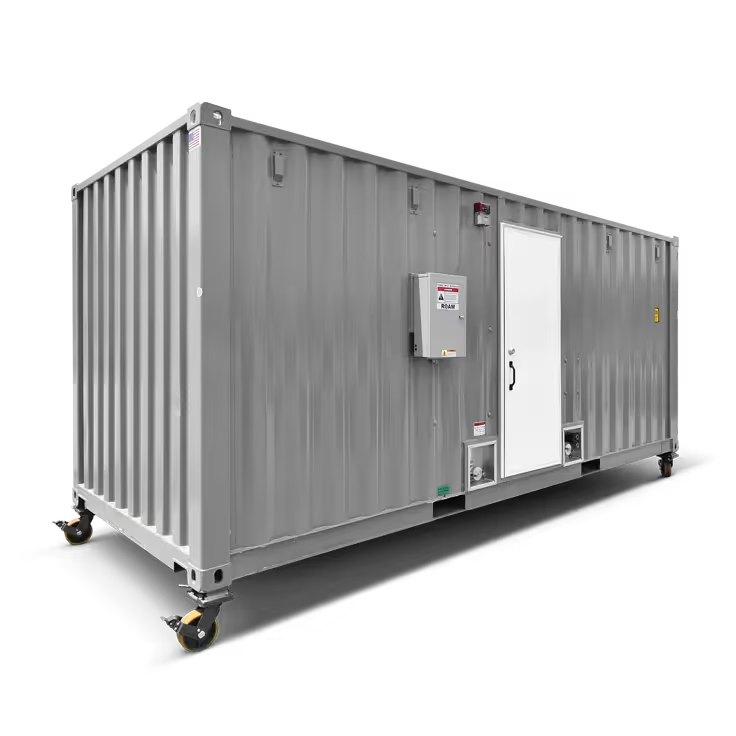
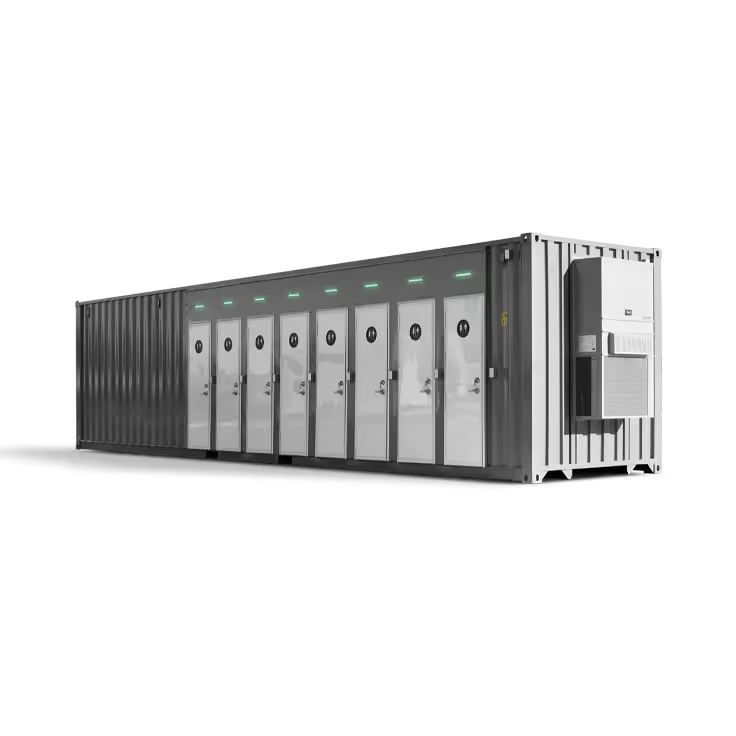
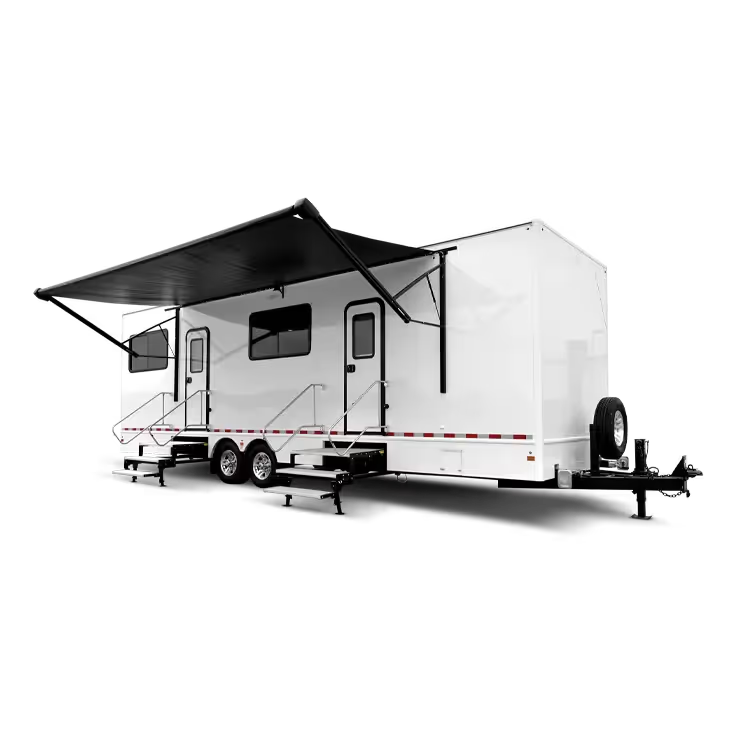
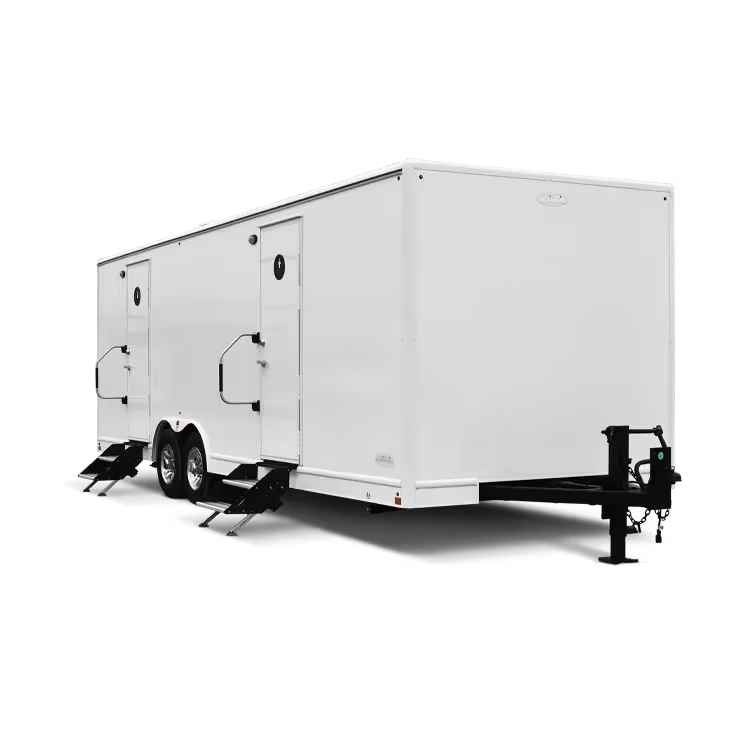
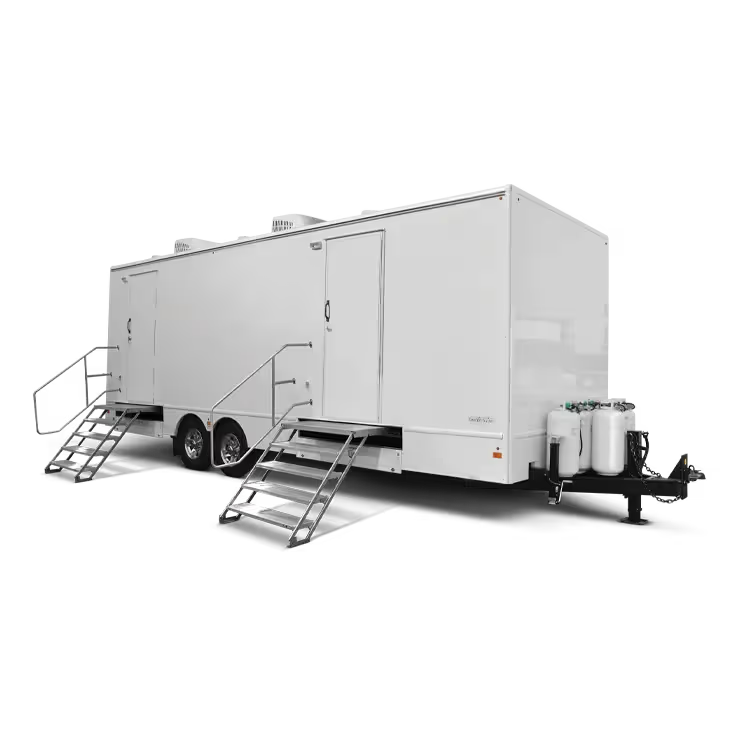
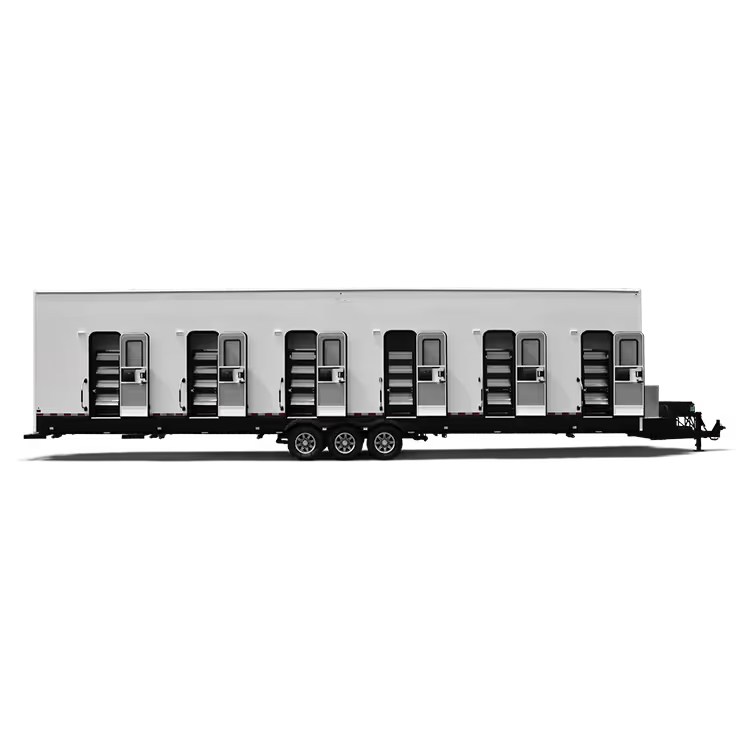
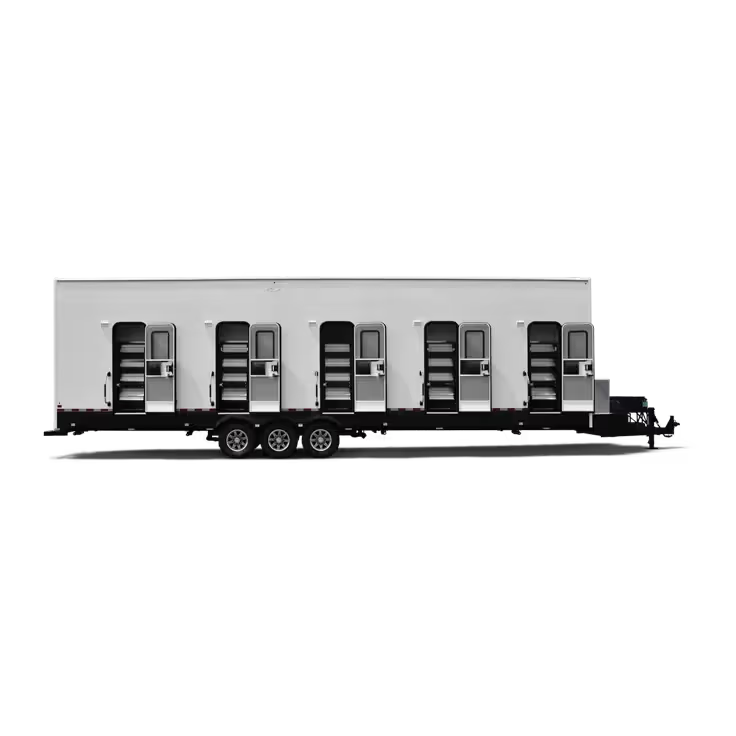
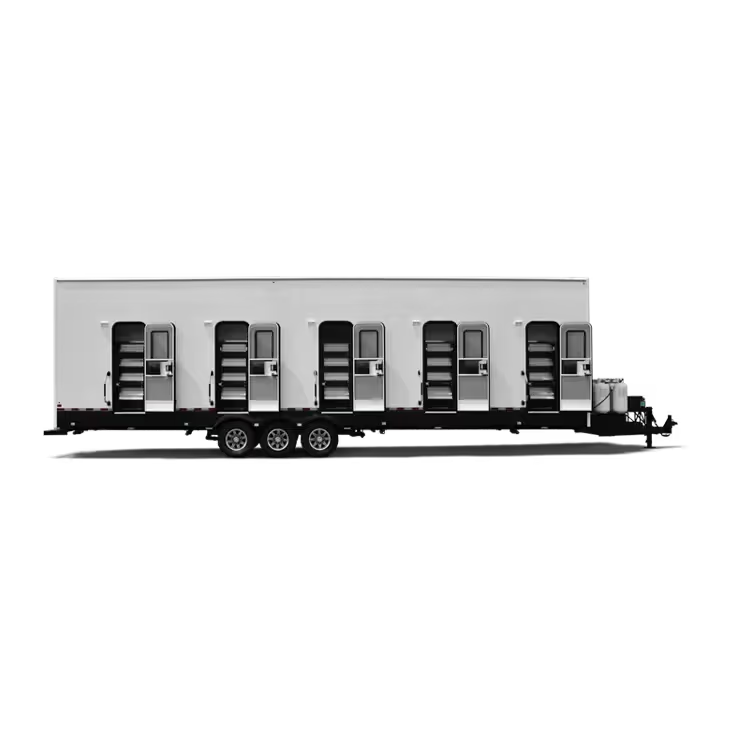
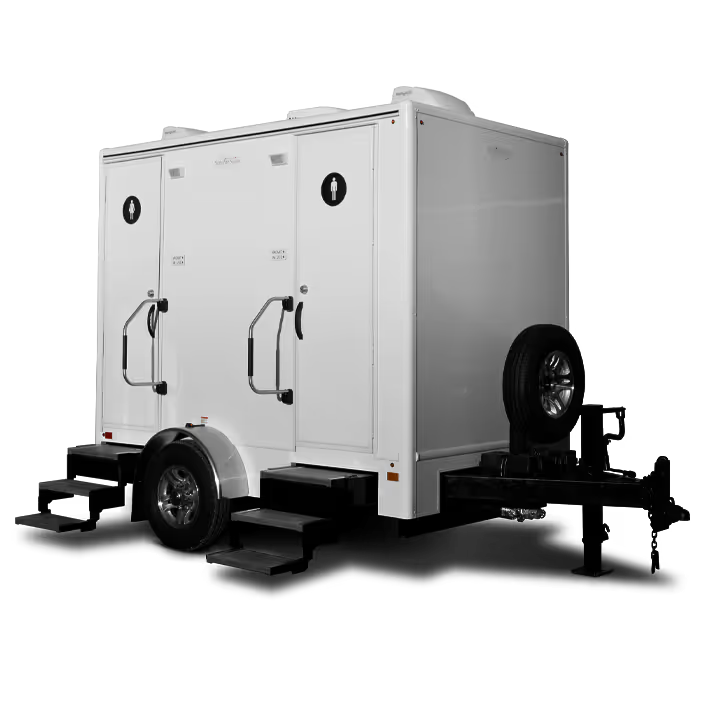
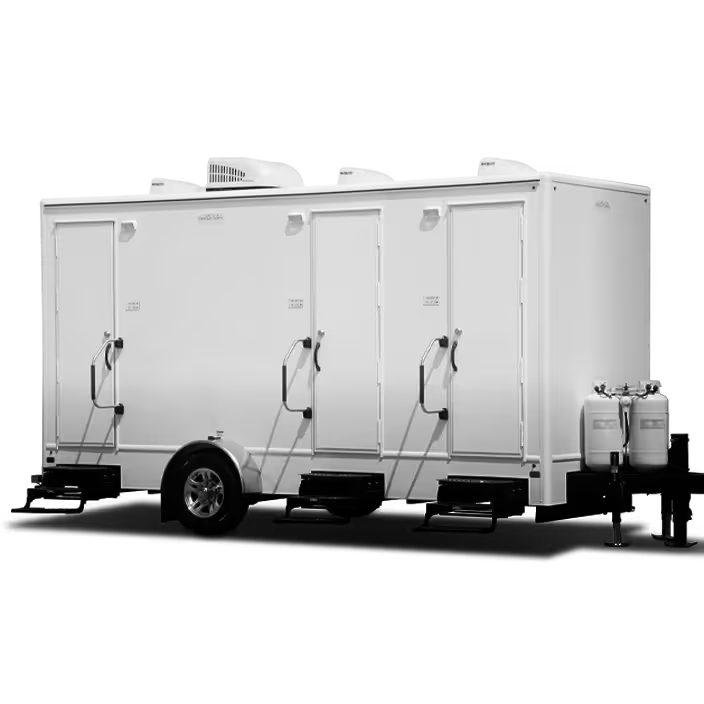
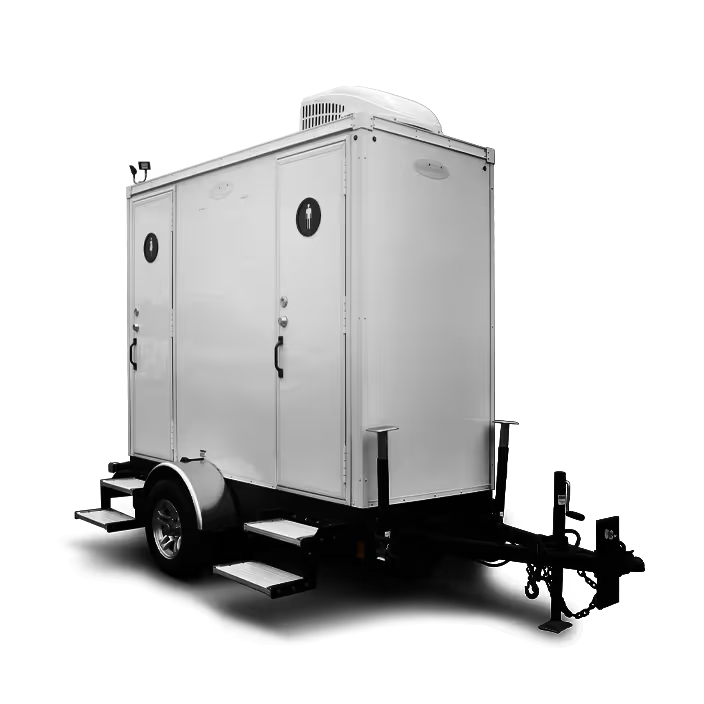
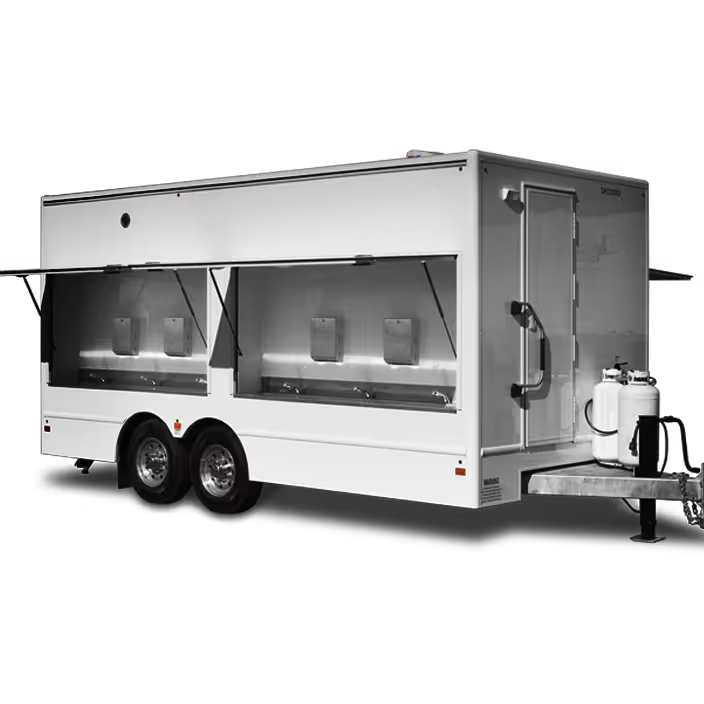
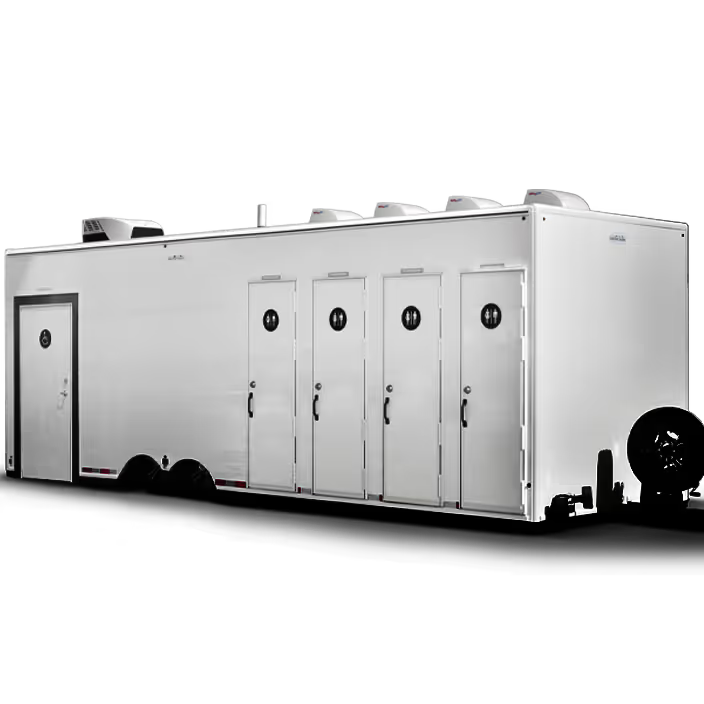
Mobile changing rooms are portable units providing private changing spaces where permanent facilities are unavailable. Ranging from lightweight pop-up tents to robust modular cabins and trailer-based systems, they serve industries like construction, events, sports, and emergency response.
Quick Overview: What You Need to Know
- Primary types: Pop-up tents, modular cabins, trailer units
- Key applications: Construction sites, outdoor events, sports facilities, beaches, temporary renovations
- Essential features: Privacy partitions, benches, hooks, ventilation, lighting, secure locks
- Materials: High-density polyethylene (HDPE), steel frames, weather-resistant fabrics
- Setup time: Seconds (pop-up tents) to hours (modular cabins)
- Price range: $40-$90 for basic pop-up tents, $9,000-$28,000+ for permanent modular units
The global portable restroom market, valued at $12.5 billion in 2023, is projected to reach $20.1 billion by 2032, reflecting a growing demand for privacy and convenience. For rental businesses, mobile changing rooms are a key opportunity to expand service offerings beyond traditional portable restrooms.
Mobile changing rooms offer best flexibility for any event, from beach parties to long-term construction projects. They are easy to transport, quick to set up, and adaptable to any location.
I’m Michelle Amelse, Vice President of Marketing and Customer Success at Satellite Industries, with over 26 years of experience in the portable sanitation industry including expertise in mobile changing rooms and related temporary facility solutions. Throughout my career, I’ve worked closely with rental operators to help them understand how durable, well-engineered mobile facilities can create new revenue streams while meeting genuine customer needs.

A Comprehensive Guide to Mobile Changing Rooms
This section will explore the different types, features, and considerations for businesses looking to invest in mobile changing rooms for their rental inventory.
Key Benefits and Applications for Your Rental Fleet
Investing in mobile changing rooms for your rental fleet offers a wealth of advantages, translating directly into increased revenue streams and market versatility for your business. The growing demand for privacy and convenience at outdoor events, construction sites, and temporary facilities is a clear indicator of the market opportunity.
What are the primary benefits of using a mobile changing room?
- Portability: Easily transported to any location, including remote sites, pop-up events, or emergency zones, offering deployment opportunities unavailable with fixed structures.
- Flexibility: Adaptable to diverse environments and user needs, from single pop-up tents to multi-stall cabins. Scale your setup by adding or removing units as required.
- Cost-effectiveness: A highly economical solution for temporary needs compared to the cost of permanent construction, making them an attractive rental option for short-term projects or events.
- Increased Revenue Streams: Tap into new market segments—includes events, construction, sports, and film production—to diversify and increase your business’s revenue.
- Convenience and Privacy: Provide the essential convenience of a private, comfortable space for users to change discreetly in any temporary setting.
- Quick Deployment: Units can be deployed rapidly—pop-up tents in minutes and modular units in hours—making them ideal for tight schedules and urgent needs.
What are the typical applications for mobile changing rooms?
The applications for mobile changing rooms are as varied as the needs for temporary privacy. Our research shows that demand is driven by outdoor recreational activities and the need for temporary facilities during renovations or events. Here are some common scenarios:
- Construction Sites: Offer workers a clean, private space to change and store gear, especially on sites with limited facilities. Can include lockers for personal protective equipment (PPE).
- Outdoor Events and Festivals: Provide convenient changing facilities for attendees, vendors, and performers at concerts, festivals, and markets. The demand for privacy at outdoor events is a major market driver.
- Sporting Events and Athletic Programs: Serve as temporary locker rooms for teams and participants at tournaments, marathons, and training camps. Can be equipped with showers and toilets.
- Parks and Recreation: Support beachgoers, campers, and hikers who need a private space to change before or after activities.
- Temporary Renovations: Provide alternative changing facilities during the renovation of permanent locker rooms in gyms, schools, or other buildings.
- Film and Television Production Sets: Function as on-location dressing rooms for actors and crew.
- Emergency Response: Deliver immediate privacy and hygiene facilities during disaster relief or for temporarily displaced populations.
Comparing Mobile vs. Traditional Changing Facilities
Position your rental offerings by highlighting the key differences between mobile and traditional changing rooms. While permanent structures are stable, their inflexibility is a major drawback for temporary needs.
How do mobile changing rooms differ from traditional changing facilities?
The core difference lies in their very nature: mobility. Traditional changing facilities are built into permanent structures, requiring significant upfront investment, land, and construction time. Mobile changing rooms, on the other hand, are designed for temporary deployment, offering unparalleled adaptability.
Here’s a quick comparison:
| Feature | Mobile Changing Rooms | Traditional Changing Facilities |
|---|---|---|
| Initial Cost | Lower (rental/purchase of unit) | Higher (construction, land, permits) |
| Installation Speed | Fast (minutes to hours/days) | Slow (weeks to months/years) |
| Portability | High (easily moved, relocated) | None (fixed location) |
| Scalability | Flexible (add/remove units as needed) | Limited (requires renovation/expansion) |
| Maintenance | Designed for easy cleaning, often low-maintenance | Ongoing building maintenance, specialized cleaning |
| Location | Anywhere with access | Fixed to a specific building/site |
| Adaptability | High (can be customized for various events/needs) | Low (designed for specific, long-term purpose) |
What are the advantages of pop-up changing tents compared to more permanent structures?
Pop-up tents offer the ultimate in portable privacy, with key advantages for specific use cases:
- Instant Setup: Deploy and collapse in seconds, perfect for rapid response.
- Ultra-Portability: Lightweight and compact, they are easily transported by hand or in any vehicle.
- Affordability: The most budget-friendly option, accessible to a wide range of customers.
- Versatility: Ideal for individual use at beaches, campsites, or for vendors at small events.
- Minimal Footprint: Their small footprint makes them suitable for crowded or small venues.
While pop-ups offer speed, larger modular or trailer units provide more robust construction, security, and amenities like showers or climate control for longer-term, high-traffic use. The best choice depends on customer needs.
Essential Features and Customization Options for Mobile changing rooms
Understanding key features and customization options is crucial for offering a high-value rental unit. Growing demand for ADA-compliant facilities also presents an opportunity to serve a wider market.
What features should one look for in a mobile changing room?
When selecting mobile changing rooms for your inventory, consider these essential features:
- Benches: Sturdy benches for sitting. Slatted designs are easy to clean and dry quickly.
- Clothing Hooks: Multiple hooks to keep clothes and bags off the floor.
- Mirrors: A large or full-length mirror is a highly valued amenity.
- Non-slip Flooring: Durable, non-slip flooring to ensure safety, especially in wet conditions.
- Interior Lighting: Adequate interior lighting (energy-efficient LED is ideal) for visibility and comfort.
- Ventilation: Proper ventilation through vents or windows to reduce humidity and odors.
- Security Locks: Reliable internal locks for privacy and security. Robust units should have heavy-duty locking systems.
- Privacy Partitions: Effective partitions in multi-stall units to ensure individual privacy.
- Integrated Sinks and Counters: Optional sinks and counters add value for multi-purpose use.
- HVAC: Climate control (HVAC) for year-round comfort in extreme weather.
What are the considerations for accessibility (e.g., ADA compliance) in mobile changing rooms?
Offering ADA-compliant units is a commitment to inclusivity that also expands your market reach. Key features include:
- Ramps: Wide, sturdy ramps for wheelchair access.
- Grab Bars: Strategically placed grab bars for support.
- Spacious Interiors: Spacious interiors with enough room for wheelchairs to maneuver.
- Accessible Fixtures: Lowered fixtures like sinks and mirrors, plus accessible handles and locks.
- Wide Doorways: Doors wide enough to accommodate wheelchairs.
For detailed technical requirements, review the U.S. Department of Justice’s 2010 ADA Standards for Accessible Design.
What are some common accessories or add-ons available for mobile changing rooms?
Beyond basic features, a range of accessories can improve functionality:
- Lockers: Individual lockers for secure personal storage.
- Shelving: Additional shelving for better organization.
- Water Heaters: For units equipped with showers.
- Generators: To power units in off-grid locations.
- Water and Waste Tanks: Large-capacity tanks to reduce servicing frequency.
- Soap and Paper Towel Dispensers: For hygiene in units with sinks.
- Changing Tables: For family-friendly events.
Can mobile changing rooms be customized to meet specific needs or branding requirements?
Yes. Customization helps differentiate your rental offerings. Options include branding, colors, and layout configurations.
- Branding Opportunities: Use the exterior of modular units for customer logos, event branding, or your own company branding, ideal for corporate clients.
- Custom Colors and Finishes: Order units in custom colors or with upgraded finishes to match corporate identities or event themes.
- Layout Configuration: Configure flexible interior layouts in modular units, combining changing areas with showers, restrooms, or lockers to meet specific client needs.
Construction, Materials, and Maintenance of Mobile changing rooms
The longevity of your rental units depends on their construction, materials, and maintenance. Satellite Industries focuses on advanced engineering for durable, user-friendly products.
What materials are commonly used in the construction of mobile changing rooms, and what are their benefits?
Materials are selected for durability, weather resistance, and ease of maintenance:
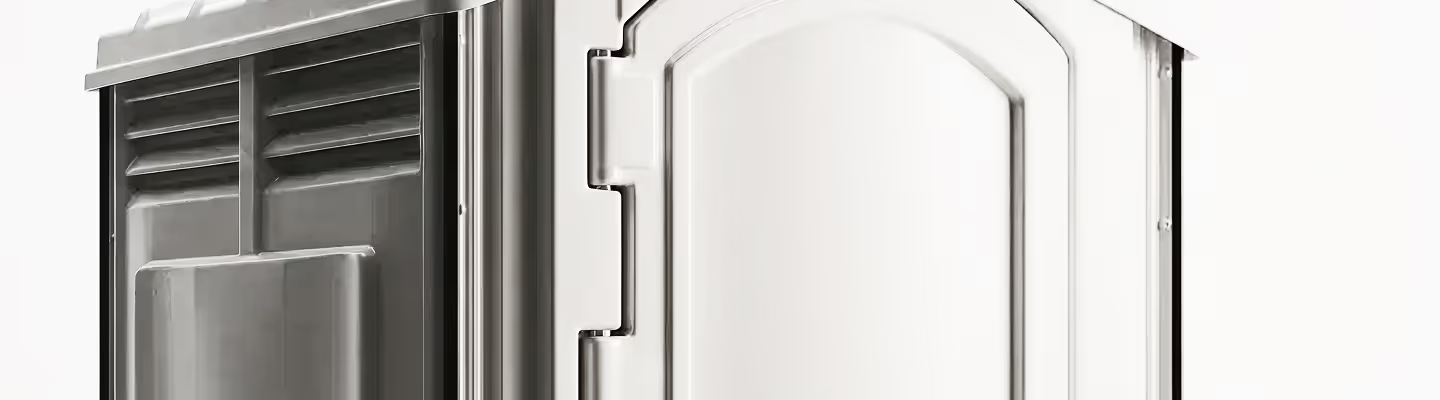
- High-Density Polyethylene (HDPE): Lightweight, durable, and impact-resistant, HDPE is common for self-contained units. It’s UV-treated and easy to clean.
- Steel Frames: Robust, corrosion-resistant steel frames provide structural integrity for modular and trailer units.
- Plastisol Steel: Plastisol steel exteriors offer an attractive, weather-resistant finish for some cabins.
- Aluminum: Used in lightweight frames, aluminum offers a good strength-to-weight ratio and resists corrosion.
- Weather-Resistant Fabrics: Durable, water-resistant fabrics like polyester or nylon are used for pop-up tents.
- OSB with PVC Flooring: A sturdy OSB base with non-slip PVC flooring is used in some modular units for safety and easy cleaning.
- Translucent Polyethylene Roofs: Translucent roofs allow natural light, reducing the need for artificial lighting.
These materials contribute to the unit’s durability, UV resistance, and ease of transport.
How easy is it to set up and transport a mobile changing room?
Ease of setup and transport is a key benefit:
- Pop-up Tents: Set up in seconds, these are lightweight, come with carrying cases, and are extremely easy to transport.
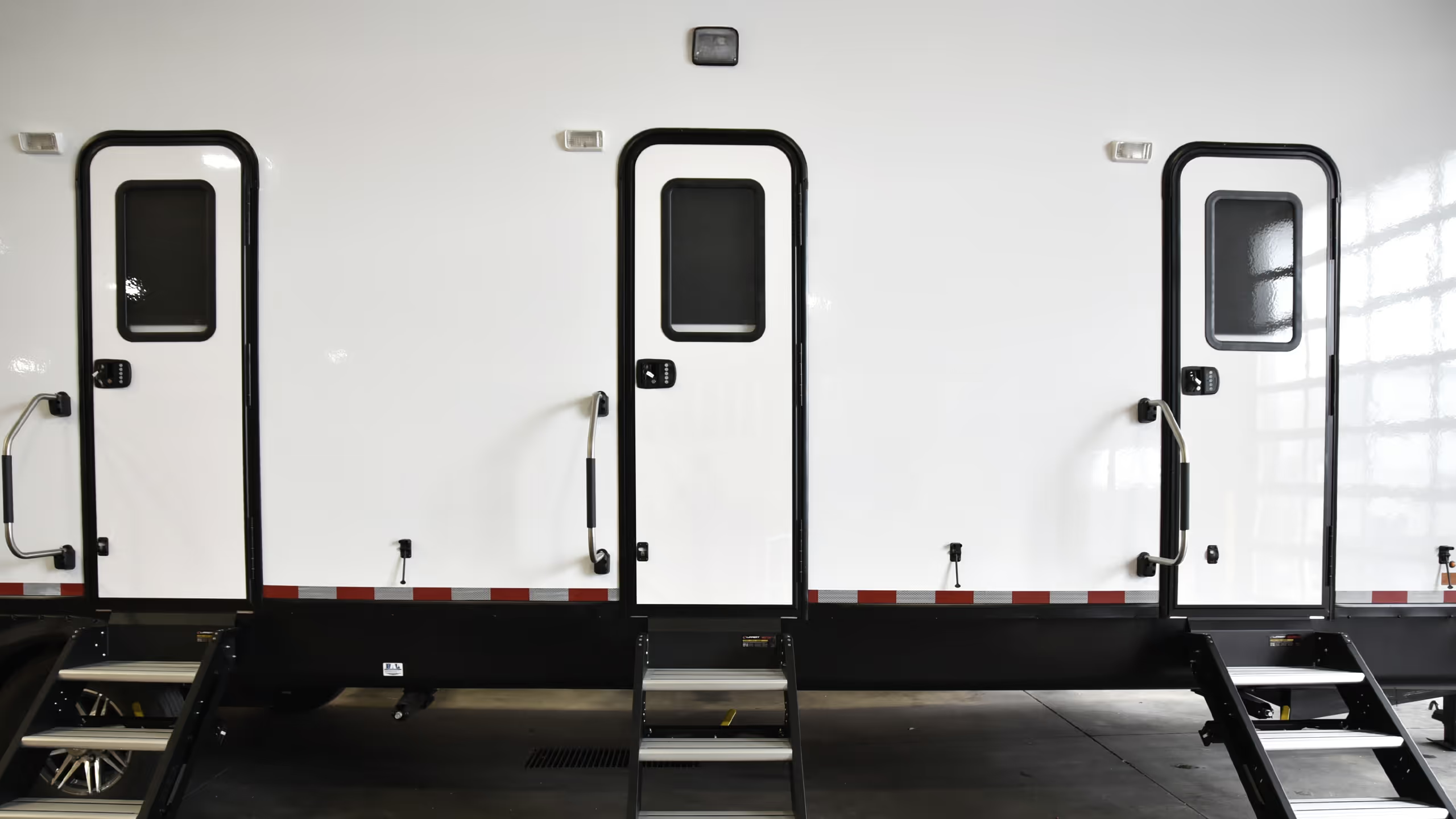
- Modular Cabins: Delivered on flatbed trucks, these robust units can be craned into place or assembled on-site for quick deployment.
- Trailer Units: Designed to be towed, these are the easiest to transport for larger capacity needs. On-site, they require leveling and utility connections.
Our advanced engineering focuses on user-friendliness, ensuring our products are not only durable but also easy to set up and move.
What are the maintenance requirements for mobile changing rooms?
Mobile changing rooms have low maintenance requirements and are designed for easy upkeep:
- Regular Cleaning: Regular cleaning and sanitization is the most critical task, simplified by easy-to-clean materials like HDPE.
- Waste Management: For units with plumbing, regular servicing of waste tanks and replenishment of fresh water is required.
- Structural Checks: Periodically check frames, doors, and locks for wear and tear to ensure safety.
- HVAC Servicing: HVAC systems require routine maintenance.
- Minor Repairs: Address minor repairs promptly to prevent larger issues.
What are the environmental considerations or sustainability aspects of mobile changing rooms?
Mobile changing rooms also offer several environmental benefits:
- Reduced Construction Waste: They eliminate the need for new construction, minimizing waste and resource use.
- Reusability and Longevity: Durable, reusable units have a long lifecycle, reducing their environmental footprint.
- Energy Efficiency: Modern units often feature energy-efficient LEDs, water-saving fixtures, and good insulation.
- Responsible Material Sourcing: Responsible material sourcing contributes to sustainability.
- Reduced Land Impact: They require minimal site preparation, reducing impact on the land.
Offering well-maintained, durable units provides a sustainable solution that aligns with modern environmental values.
Conclusion: Investing in Versatility and Durability
Mobile changing rooms are a major growth opportunity for rental businesses, meeting the market’s need for privacy and convenience. These solutions, from pop-up tents to modular cabins, offer unparalleled flexibility and cost-effectiveness.
Investing in a diverse fleet lets you serve clients in events, construction, sports, and emergency services. Choose versatile units built for longevity, prioritizing durable materials, user-centric design, and options for customization and accessibility.
The portable restroom market is expanding rapidly. Offering high-quality mobile changing rooms positions your business to capitalize on this growth, creating new revenue and strengthening your market presence.
At Satellite Industries, we understand the needs of rental operators. We specialize in advanced engineering to create durable, user-friendly, and low-maintenance portable sanitation products designed to maximize the return on your investment. Our commitment to quality ensures that the products you offer to your customers will withstand the rigors of repeated use and transport, providing reliable service for years to come.
Explore our range of portable sanitation solutions and find how our commitment to advanced engineering can support your business growth.