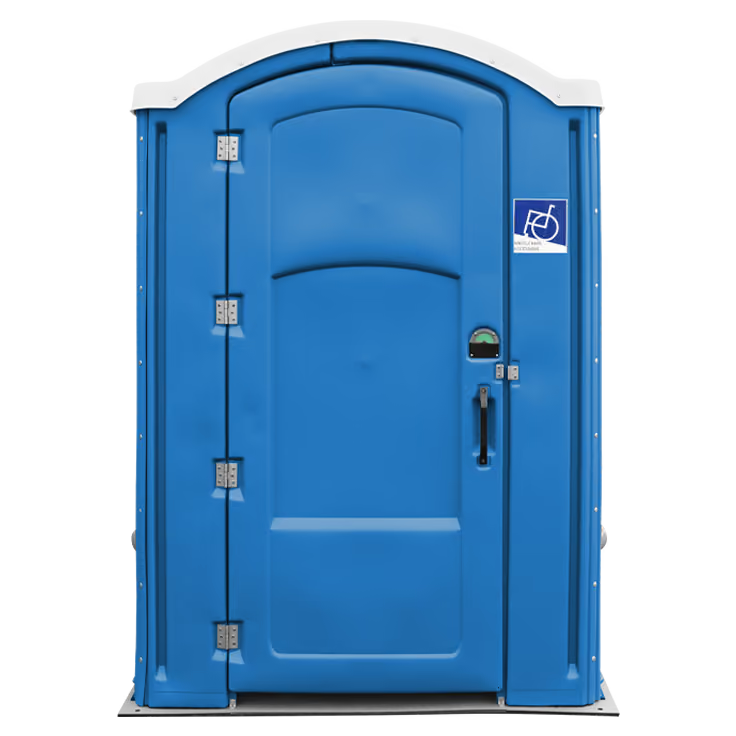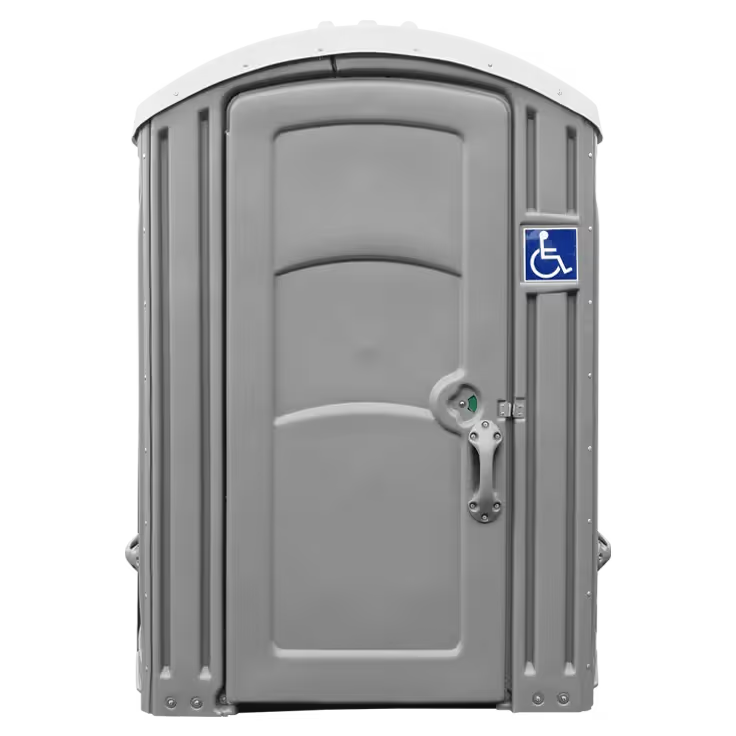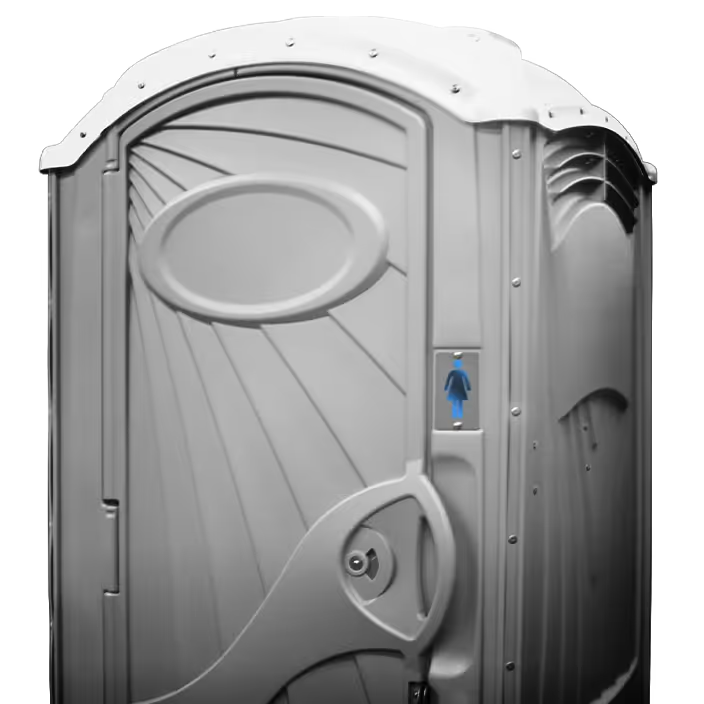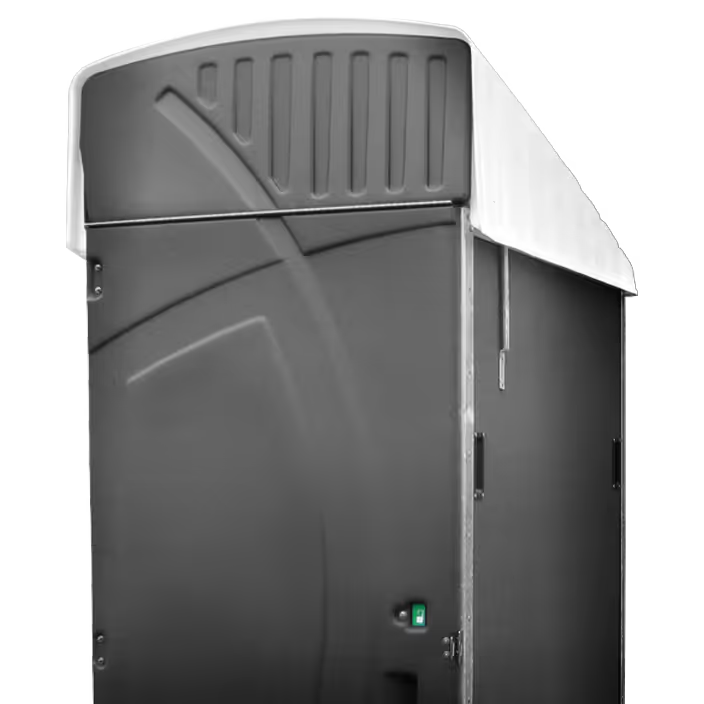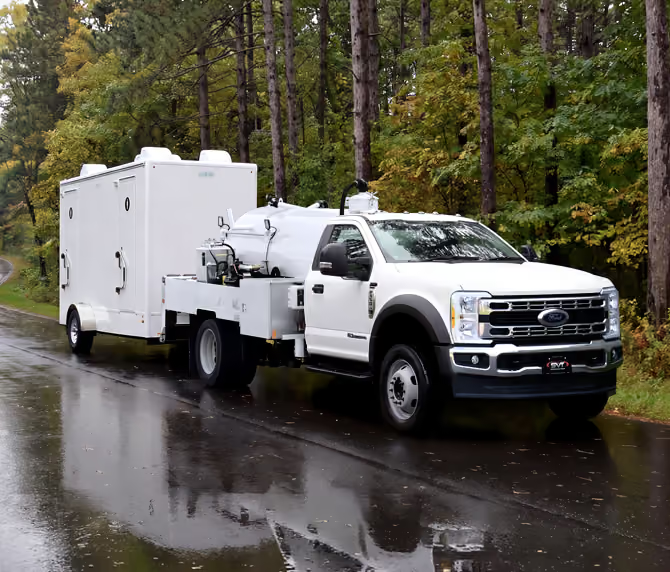
Handicap accessible restroom

Beyond the Basics: Renting Accessible Restrooms

Why Accessibility in Portable Sanitation Matters

A Handicap accessible restroom is a portable unit designed to meet ADA (Americans with Disabilities Act) standards, allowing people with disabilities to use them safely and independently. Minimum requirements include:

  • 60-inch turning circle for wheelchair maneuverability
  • Toilet seat height between 17-19 inches
  • Grab bars mounted 33-36 inches above the floor
  • 32-inch minimum doorway width with outward-swinging doors
  • Clear floor space of 30×48 inches in front of fixtures
  • Sink rim no higher than 34 inches with accessible faucet controls

Over one in four Americans lives with a disability, and 13.7% of people have limited mobility. This significant portion of the population depends on accessible facilities at events, construction sites, and public gatherings.

The Americans with Disabilities Act (ADA) requires at least 5% of temporary portable restrooms to be accessible and properly marked. For sanitation providers, compliance means serving everyone and expanding your customer base to events, municipalities, and contractors who prioritize inclusivity.

I’m Michelle Amelse, Vice President of Marketing and Customer Success at Satellite Industries, where I’ve spent over 26 years helping sanitation providers understand and meet the evolving standards for Handicap accessible restroom solutions. My work ensures our customers have the knowledge and equipment to serve all users effectively.

Infographic explaining key ADA restroom requirements including a 60-inch diameter turning circle, toilet seat height of 17-19 inches, grab bars mounted at 33-36 inches, sink rim maximum height of 34 inches, 32-inch minimum door width, and 30x48 inch clear floor space with measurements and top-down layout diagrams - Handicap accessible restroom infographic

Quick Handicap accessible restroom terms:

The Definitive Guide to a Handicap Accessible Restroom

For distributors and renters of portable sanitation, understanding accessible design is paramount. This guide details the non-negotiable ADA standards for a truly inclusive Handicap accessible restroom, covering core components, dimensions, and layout.

Core Components of a Handicap Accessible Restroom: Toilets, Sinks, and Grab Bars

A Handicap accessible restroom has features that allow individuals with mobility impairments to use the facilities with dignity and ease. Every detail, from toilet height to faucet type, matters.

Accessible Toilets

In a Handicap accessible restroom, the toilet’s design must prioritize user transfer and stability.

  • Seat Height: 17 to 19 inches above the floor to accommodate wheelchair transfers.
  • Centerline Placement: 16 to 18 inches from the sidewall for proper grab bar alignment and user transfer.
  • Flush Controls: Easy to operate (less than 5 lbs of force) without tight grasping, pinching, or twisting. Locate on the open side of the toilet for easy reach. Lever or sensor-activated controls are ideal.
  • Stall Dimensions: Wheelchair-accessible stalls must be at least 60 inches wide and 56 inches deep (wall-mounted toilet) or 59 inches deep (floor-mounted toilet).
  • Children’s Toilets: In facilities for children, seat height should be 10 to 12 inches above the floor.

Accessible Sinks

Accessible sinks must provide comfortable, unobstructed access for wheelchair users.

  • Rim Height: No higher than 34 inches from the floor.
  • Knee and Toe Clearance: A clear space of at least 30 inches wide, 29 inches high, and 19 inches deep is required under the sink. Pipes must be recessed or protected.
  • Faucet Operation: Operable with one hand, using less than 5 lbs of force without tight grasping or twisting. Lever or sensor-activated faucets are ideal.
  • Mirrors: The bottom edge of a mirror above a sink must be no higher than 40 inches from the floor.
  • Children’s Sinks: For children, knee clearance can be 24 inches if the sink rim is no higher than 31 inches.

Accessible Grab Bars

Grab bars are fundamental for safety and stability, with strictly regulated placement, dimensions, and strength.

  • Mounting Height: 33 to 36 inches above the floor.
  • Diameter and Clearance: 1.25 to 1.5-inch diameter with a 1.5-inch clearance from the wall for a secure grip.
  • Length and Location: Rear grab bars must be at least 36 inches long; side grab bars at least 42 inches long. All bars must withstand 250 pounds of force.
  • Children’s Grab Bars: Mount between 18 and 27 inches above the floor.

For a deeper dive into these specifics, consult the Guide to the ADA Accessibility Standards.

Essential Clearances and Layout Dimensions

The overall layout and clear space are critical for wheelchair maneuverability. Without adequate room, even compliant fixtures are unusable.

  • Turning Space: A 60-inch diameter clear circle or a T-shaped space is required to allow a wheelchair user to turn around. Sinks with proper knee/toe clearance can overlap this space.
  • Clear Floor Space: A clear, unobstructed space of at least 30 by 48 inches is required in front of all fixtures.
  • Doorway Clear Width: At least 32 inches of clear opening when the door is open 90 degrees.
  • Door Height: A minimum of 80 inches tall.
  • Outward-Swinging Doors: Doors in single-user restrooms and stalls should swing outward or be pocket doors to avoid obstructing the interior clear space.
  • Easy-to-Use Door Hardware: Hardware must be operable with one hand, using less than 5 lbs of force and no tight grasping, pinching, or twisting.

A top-down diagram illustrating the 60-inch turning radius and clear floor space within a portable restroom, highlighting the dimensions for wheelchair maneuverability - Handicap accessible restroom

Understanding a Handicap Accessible Restroom in Different Contexts

Requirements for a Handicap accessible restroom can vary by context. Standards differ for single-user, multi-user, and temporary facilities.

  • Single-User vs. Multi-User Restrooms: When single-user restrooms are clustered, at least 50% must be accessible. Multi-user restrooms must include at least one wheelchair-accessible stall (60 inches wide). If there are six or more total fixtures/stalls, an ambulatory accessible stall (36 inches wide with grab bars) is also required. At least one sink and urinal (if provided) must also be compliant.
  • Portable Units for Temporary Events: For temporary events, the ADA requires at least 5% of portable restroom units to be Handicap accessible restroom units. They must meet all standard requirements and include ramps for access. The 5% rule may not apply if units are for construction personnel only, but providing accessible options is always a best practice.
  • Accessible Restrooms for Children: In facilities serving children 12 and under, ADA provides alternate specifications. Key differences include lower toilet seats (10-12 inches), grab bars (18-27 inches), and sink heights (max 31 inches). Providing separate accessible compartments for adults and children is a best practice.

Signage, Doors, and Avoiding Common Mistakes

A compliant Handicap accessible restroom is useless if users can’t find or enter it. Clear signage, functional doors, and avoiding common mistakes are crucial.

Clear and Compliant Signage

  • International Symbol of Accessibility (ISA): The wheelchair symbol is required to identify accessible restrooms.
  • Mounting: Place signs on the latch side of the door, no higher than 60 inches from the floor.
  • Tactile Features: Signs must include high-contrast, tactile (raised) characters and Braille.

Functional Doors

  • Clear Opening: Must be at least 32 inches.
  • Hardware: Must be operable with one hand, using less than 5 lbs of force.
  • Swing Direction: Doors should swing outward to avoid obstructing interior clear space.

Avoiding Common Mistakes

  • Incorrect Grab Bar Installation: Ensure bars are at the correct height, have proper wall clearance, and can withstand 250 lbs of force.
  • Insufficient Turning Space: Do not obstruct the 60-inch turning circle or T-shaped space.
  • Obstructed Clear Floor Space: Keep the 30×48-inch space in front of fixtures clear of items like trash cans.
  • Inward-Swinging Doors: Use outward-swinging doors in small restrooms to prevent trapping users.
  • “Accessible” vs. “ADA Compliant”: Aim for full ADA compliance, which means meeting all specific federal guidelines, not just general accessibility.
  • Poor Maintenance: A dirty or poorly maintained unit is not truly accessible. Ensure regular cleaning and stocking.

Equipping Your Fleet for Full Compliance and Customer Satisfaction

Providing ADA-compliant Handicap accessible restroom units is a strategic business decision that fosters inclusivity and expands your market. Non-compliance carries significant risks, including financial penalties up to $75,000 for a first violation and severe reputational damage.

By prioritizing accessibility, you actively:

  • Expand Your Customer Base: Become a preferred provider for events, municipalities, and construction projects that require ADA compliance.
  • Improve Your Reputation: Signal a commitment to social responsibility and inclusivity.
  • Meet a Growing Need: Serve the 13% of U.S. adults with mobility issues, a constant and growing market.

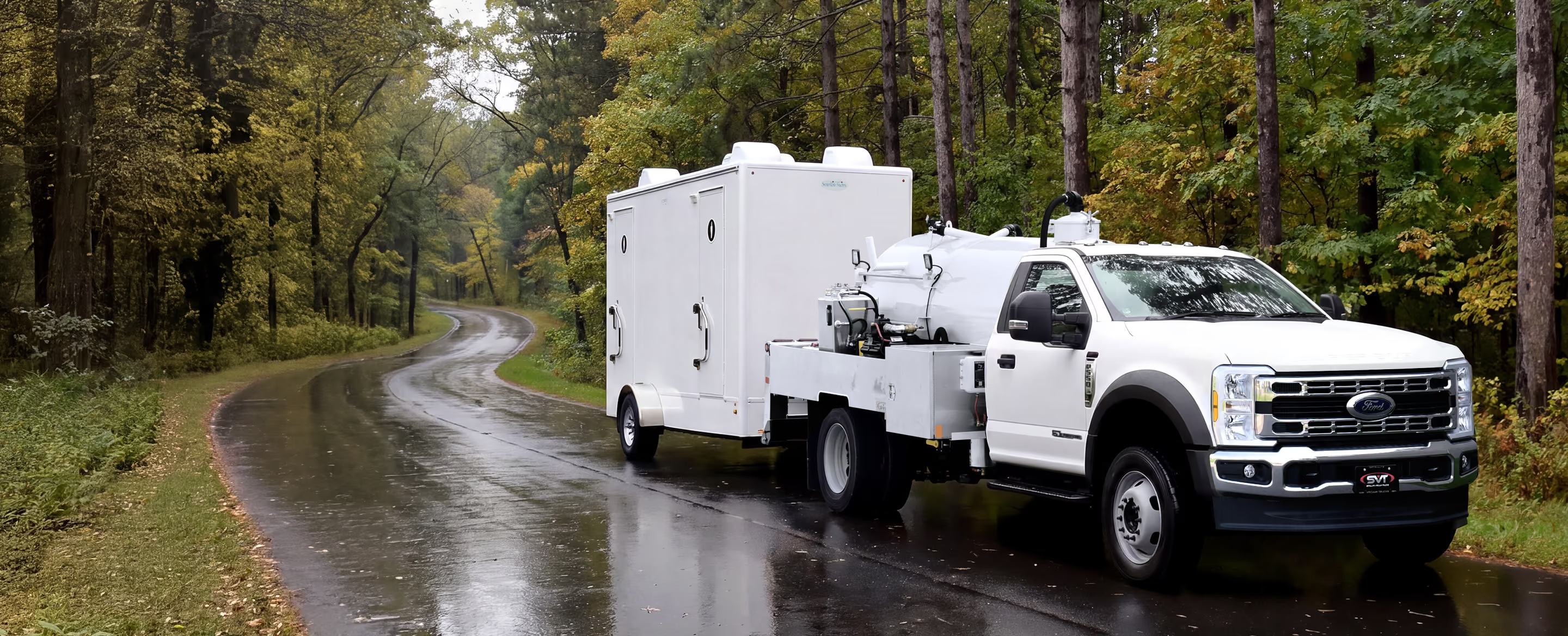
At Satellite Industries, our advanced engineering creates durable and user-friendly solutions. We manufacture a range of robust, compliant portable restrooms and trailers designed to meet these rigorous standards. Our products provide the space, stability, and features that make a Handicap accessible restroom truly functional for all users.

Providing accessible sanitation is more than a legal obligation; it’s a commitment to an equitable society. Let us help you equip your fleet with best-in-class accessible portable restrooms, empowering you to serve every customer with confidence and care.

Explore our full range of portable sanitation solutions.