
The Science of Squeaky Clean: Why Water Temperature Matters (or Doesn't) for Hand Washing
Hot water hand washing: 5 Myths & Best Practices
The Hot Water Habit: Understanding What Works (and What Doesn’t)
Hot water hand washing is a deeply ingrained habit, but does it remove more germs than cold water? Here’s what the science says:
Quick Answer: Water Temperature Doesn’t Significantly Impact Germ Removal
- Cold water works just as well as hot water for removing bacteria and viruses from hands.
- Soap, scrubbing, and duration are what actually matter for effective handwashing.
- Hot water can cause skin irritation and damage your skin’s protective barrier.
- Warm or cold water (whatever is comfortable) is sufficient when combined with proper technique.
- 20 seconds of scrubbing is the critical factor, not temperature.
The belief that hot water is essential for clean hands is a persistent public health myth. Research from Rutgers University found that water temperature—whether 60°F, 79°F, or 100°F—had no significant effect on bacteria reduction during handwashing.
This matters because heating water for handwashing accounts for roughly 6.3 million metric tons of CO2 emissions annually in the United States alone—equivalent to two coal-fired power plants. This energy waste stems from a common misconception.
So why do many health codes still require hot water in food service and healthcare? And what temperature should you provide at your portable handwashing stations?
I’m Michelle Amelse, and in my 26 years at Satellite Industries, I’ve seen the portable sanitation industry evolve around hot water hand washing requirements. Understanding the science helps our customers make informed decisions about their equipment and operational costs.
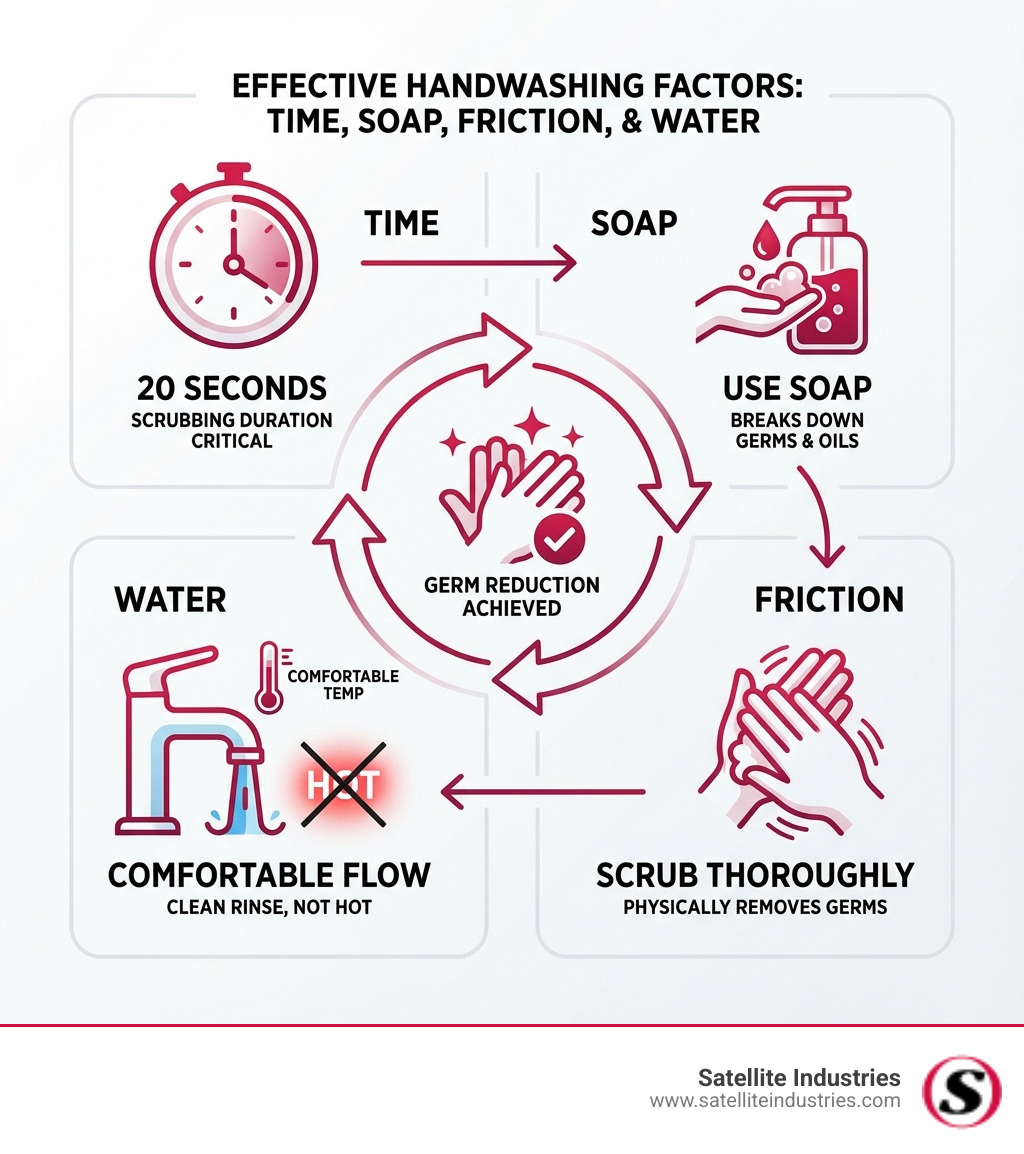
The Great Debate: A Guide to Hot Water Hand Washing and Germ Removal
For generations, we’ve believed hot water is superior for handwashing, associating heat with cleanliness. But science reveals a different picture. This section explores the truth about water temperature, health guidelines, and the environmental and financial implications of our hot water hand washing habits.
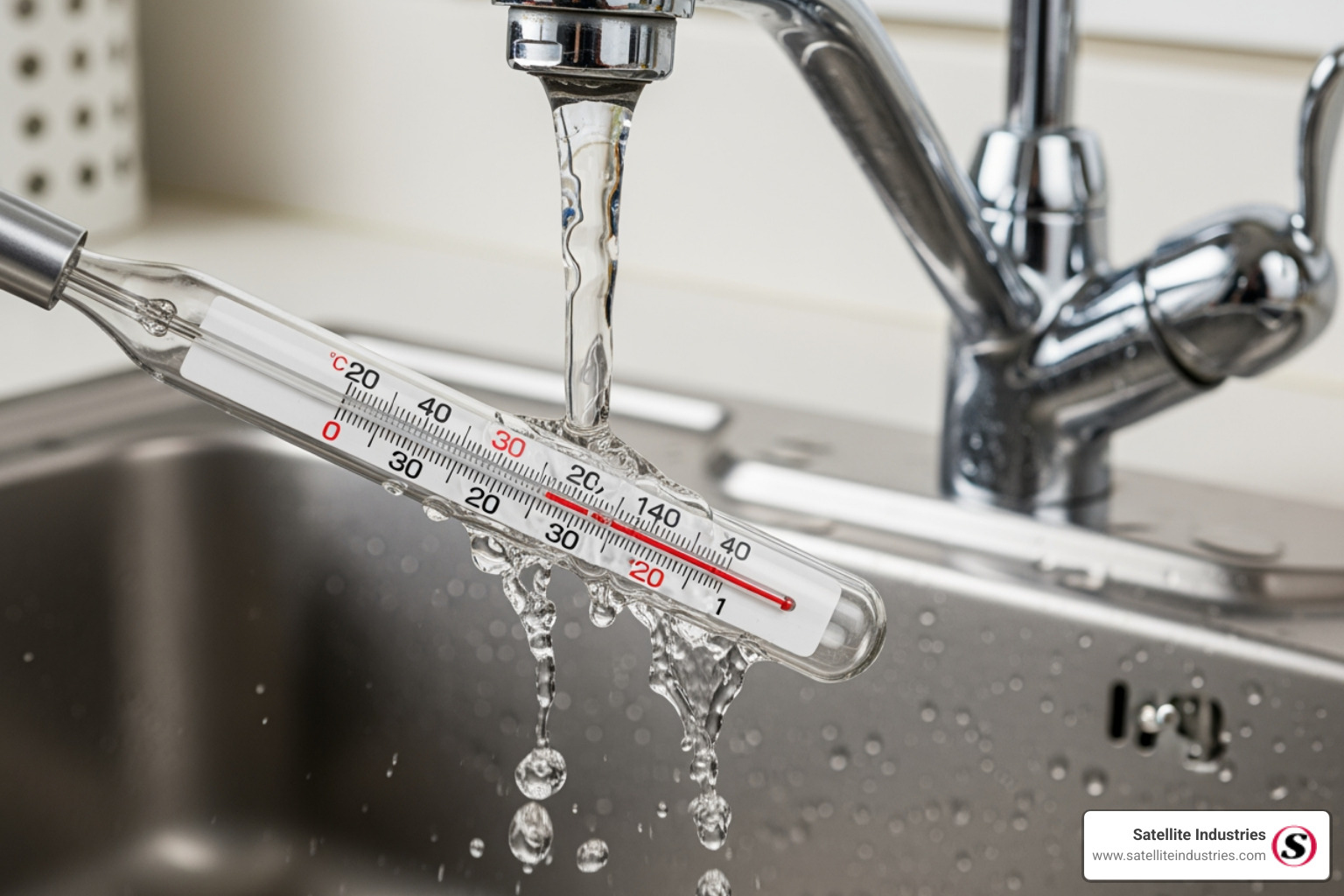
The Science of Soap and Water: Does Temperature Kill Germs?
Does water temperature impact germ removal? Scientific studies show the answer is largely no. While heat can kill bacteria, the required temperature (104-131°F) would be hot enough to scald your skin and cause serious injury.
So, if it’s not the heat, what is doing the work? It’s the combination of soap, friction, and duration.
- Soap’s Role: Soap lather forms tiny structures called micelles, which trap dirt, grease, and germs. Water then rinses these trapped particles away.
- Friction’s Power: Vigorous scrubbing of all hand surfaces physically dislodges germs and dirt. This mechanical action is crucial for effective handwashing.
- Duration is Key: Duration is the most critical factor. Studies, like one in the Journal of Food Protection, show washing time is more important than temperature. A Rutgers study found that washing for just 10 seconds significantly removed bacteria, regardless of water temperature.
As Rutgers professor Donald Schaffner stated, “People need to feel comfortable when they are washing their hands but as far as effectiveness, this study shows us that the temperature of the water used didn’t matter.” The goal of handwashing is not to sterilize skin, but to reduce harmful pathogens to a safe level by physically removing them, not killing them with heat.
Health and Safety Risks of Using Hot Water for Hand Washing
Beyond its ineffectiveness for killing germs, using hot water for handwashing poses several health and safety risks.
- Skin Irritation and Damage: Prolonged exposure to hot water can irritate the skin, especially with soap, leading to dryness, redness, and cracking.
- Dermatitis: Repeated hot water exposure is a risk factor for contact dermatitis. The World Health Organization (WHO) and HICPAC guidelines advise against very hot water, as it increases the likelihood of skin damage.
- Compromised Skin Barrier: Hot water strips the natural oils from our skin’s protective barrier. A compromised barrier is less resistant to pathogens, making damaged skin more susceptible to bacterial colonization. For healthcare workers, hand irritation is a common reason for poor handwashing compliance.
- Scalding Risk: Truly germ-killing temperatures are scalding. While most commercial stations have temperature limits, older or poorly maintained systems pose a risk.
For both efficacy and safety, cooler or comfortably warm water is the smarter choice. It protects our skin and encourages proper handwashing duration without compromising germ removal.
Navigating Regulations: What the FDA and CDC Recommend
While scientific consensus leans away from the necessity of hot water, some regulatory bodies still require it.
- FDA Food Code: The U.S. Food and Drug Administration (FDA) Food Code requires handwashing sinks in food establishments to reach at least 38°C (100°F). This means if you provide portable handwashing stations for food service operations in the Americas, your equipment must meet this temperature for compliance. Despite this rule, researchers like Donald Schaffner from the Rutgers study advocate for revising the policy, stating, “I think this study shows that there is no temperature effect, and what we want to do is encourage people to wash their hands.”
- CDC Recommendations: The Centers for Disease Control and Prevention (CDC) guidance on hand hygiene recommends using your preferred water temperature—cold or warm—as both are equally effective. The CDC advises against hot water to prevent skin drying, clarifying that water hot enough to kill germs would cause scalding.
- WHO Guidelines: The World Health Organization (WHO) guidelines agree, stating temperature is not critical for microbial removal and that very hot water should be avoided to prevent skin irritation.
- Local and National Variations: Handwashing temperature requirements vary by location. For instance, NHS guidelines in Europe recommend warm water but stress proper technique. As a sanitation provider, it’s crucial to check federal and local requirements for your customers’ facilities.
The discrepancy between regulations and science is a challenge. Compliance is often mandatory in industries like food service. At Satellite Industries, we provide equipment that meets these varied requirements while also educating on best practices.
The Environmental and Financial Cost of Hot Water Hand Washing
The belief in hot water hand washing carries a significant environmental and financial burden. Heating water consumes vast energy, increasing utility bills and carbon footprints.
- Massive Energy Consumption: In the United States alone, heating water for handwashing produces about 6.3 million metric tons (MMt) of CO2 equivalent (CO2eq) emissions annually—equivalent to two coal-fired power plants. In the European Union, heating water accounts for about 15% of residential energy use.
- Environmental Impact: This energy use contributes to climate change. An “Environmental Cost of Misinformation” study highlights this problem. If people shifted to using cooler water, the potential for emissions reduction is substantial. In the U.S., this change could reduce emissions by nearly 1 MMt annually.
- Financial Burden: For businesses, the cost of heating water is substantial, including energy bills, equipment investment, and maintenance. Reducing water temperatures leads to significant first-cost and operational savings. By opting for tempered or cold water where regulations permit, businesses can significantly cut utility expenses.
These environmental and financial costs are driven by a misconception. Embracing the science allows for more sustainable and cost-effective practices without compromising public health.
Best Practices for Effective and Efficient Hand Hygiene
Now that we’ve debunked the hot water myth, let’s focus on what truly matters: proper technique for effective hand hygiene. This section covers the optimal handwashing procedure and how to apply these insights to your business.
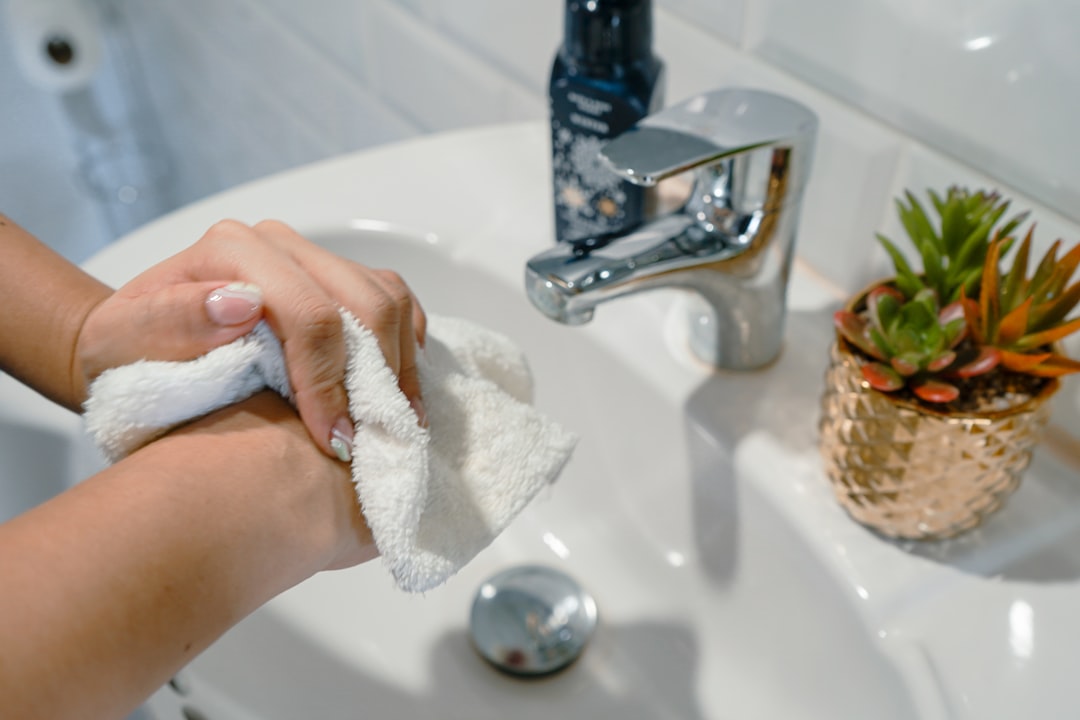
The Optimal Handwashing Technique (Regardless of Temperature)
Effective handwashing steps are the same regardless of water temperature. The goal is to physically remove germs using soap, friction, and time. Here is a five-step guide:
- Wet Your Hands: Start by wetting your hands with clean, running water at a comfortable temperature.
- Apply Soap: Apply enough plain soap to cover all hand surfaces. Antibacterial soaps have not been found to provide additional health benefits in community settings.
- Lather and Scrub Vigorously for 20 Seconds: This is the most crucial step. Lather and scrub all surfaces for at least 20 seconds: palms, backs of hands, between fingers, thumbs, and under nails. Hum “Happy Birthday” twice to time it. This vigorous scrubbing creates the friction needed to dislodge germs. While the average wash is only 4-6 seconds, 20 seconds is the optimal target for public health.
- Rinse Thoroughly: Rinse your hands well under clean, running water, ensuring all soap residue is washed away.
- Dry Completely: Dry hands completely with a clean paper towel or an air dryer. This is a critical step, as germs spread more easily on wet hands. In public settings, use a paper towel to turn off the faucet and open the door to avoid recontamination.
This technique is effective globally and is the best practice for preventing the spread of infectious diseases.
Conclusion: Choosing the Right Temperature for Your Needs
The science is clear: water temperature plays a minimal role in removing germs. What truly matters is the mechanical action of scrubbing with soap for an adequate duration.
Here are our key takeaways:
- Effectiveness: Cold or comfortably warm water is just as effective as hot water at removing germs when combined with soap and proper scrubbing for 20 seconds.
- Skin Health: Hot water can irritate and damage your skin, potentially leading to dermatitis and making your hands more susceptible to bacterial colonization. Cooler temperatures are gentler on the skin.
- Environmental and Financial Benefits: Heating water is a significant energy drain. Opting for cooler water is a simple step towards sustainability and cost savings.
- Compliance vs. General Use: While some regulations (e.g., for food service) mandate specific warm water temperatures, this is for compliance rather than scientific necessity. For general public use, comfort should be the guiding principle.
At Satellite Industries, we serve customers globally, from events in the Americas and Europe to remote sites in Australia or Africa. Our advanced engineering ensures our portable handwashing stations are durable, user-friendly, and meet local regulations. We offer units with hot and cold water options to meet specific needs, from regulatory compliance (e.g., 100°F for food prep) to providing comfortable water for general use.
By understanding the science, we can make smarter, sustainable choices without compromising public health. Remember: it’s not the heat, but the habit, soap, and scrub that count.
Explore our advanced portable sanitation solutions to find the perfect handwashing stations that combine durability, user-friendliness, and effective hygiene for your next event or project.
Latest from the Satellite Industries Blog
Need Help {Finding the Right Sanitation Solution?}
Satellite Industries is the largest manufacturer of portable restrooms, restroom trailers, restroom trucks, septic trucks, slide-ins, unit haulers, vacuum technology, modular solutions, consumables and deodorizers.