The Ultimate Handbook for Portable Living and Sleeping Units
Why Portable Accommodation Units Are Revolutionizing Temporary Housing
Portable accommodation units are prefabricated structures that can be transported to different locations and easily assembled on-site to provide temporary housing, office space, or specialized facilities. These self-contained units offer essential amenities and are designed to meet the immediate space needs of various industries.
Key Types of Portable Accommodation Units:
- Sleeper Units – Private bedrooms with en-suite facilities for workforce housing
- Bunkhouse Trailers – Multi-occupancy units sleeping 4-10 people with shared common areas
- Mobile Shower Trailers – Sanitation facilities with multiple private shower stalls
- Locker Room Trailers – Combined changing and shower facilities for events and worksites
- Mobile Offices – Workspace solutions with desks, meeting areas, and connectivity
The global portable cabins market was valued at $10.5 billion in 2022 and is projected to reach $17.8 billion by 2030, exhibiting a CAGR of 6.8%. This growth reflects the increasing demand across construction, energy, mining, and disaster relief sectors.
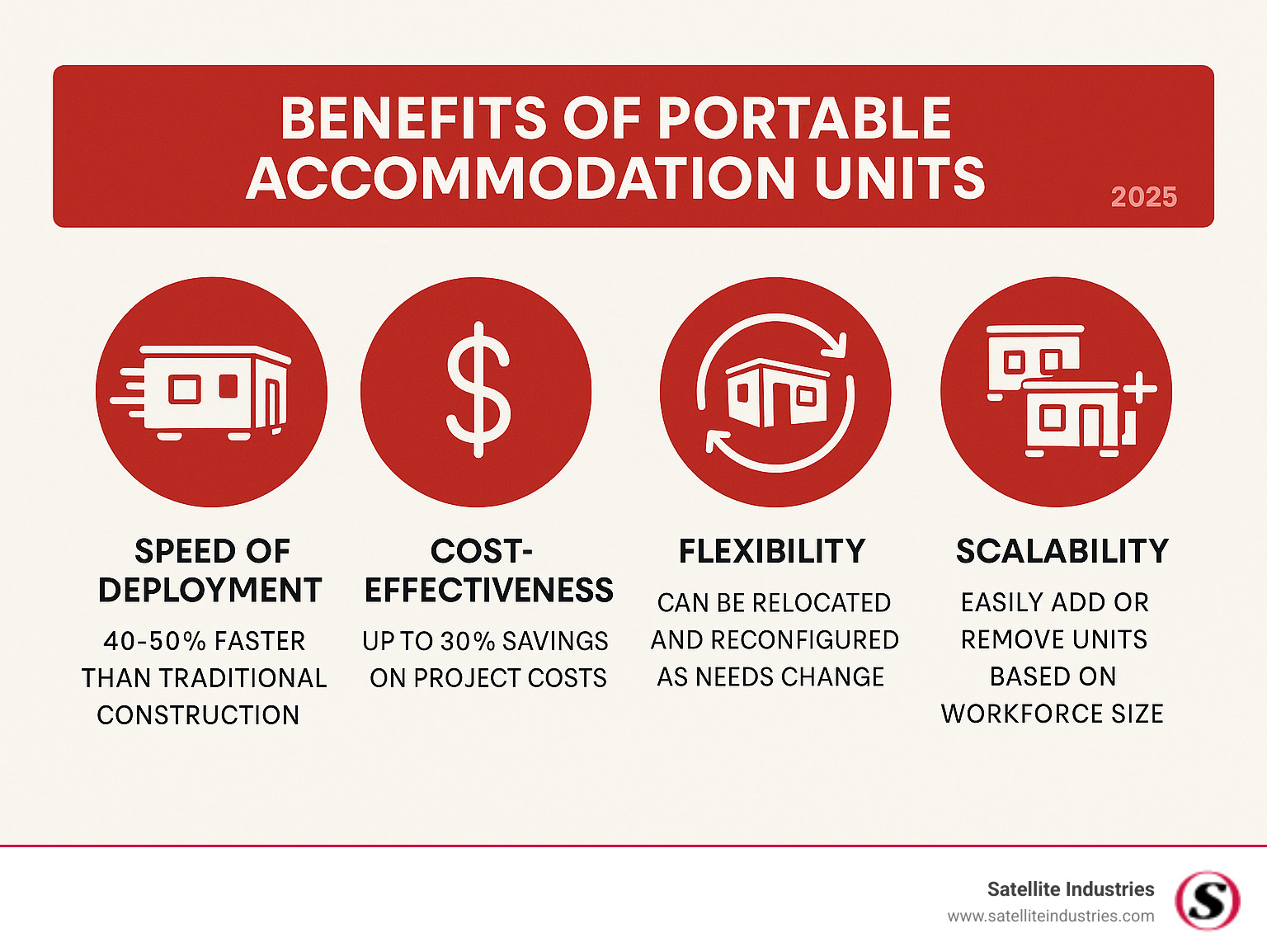
Industries commonly using these units include construction (temporary worker housing), energy and mining (remote site accommodation), disaster relief (emergency shelters), and events (staff quarters). The key advantage is speed – portable units can be deployed 40-50% faster than traditional buildings while offering cost savings of up to 30% on overall project costs.
As Michelle Amelse, Vice President of Marketing and Customer Success at Satellite Industries with over 26 years of experience in the portable sanitation and accommodation industry, I’ve seen how portable accommodation units have evolved to meet increasingly sophisticated workforce housing needs. My experience in strategic marketing and manufacturing within this sector has shown me the critical importance of quality, durability, and user-friendliness in these temporary housing solutions.
A Deep Dive into Portable Accommodation Units
Portable accommodation units are sophisticated, engineered solutions—not simple boxes. They represent decades of modular construction innovation, designed for comfort, functionality, and durability.
Types and Common Applications
The versatility of these units is astounding. I’ve seen them transform remote mining operations and busy festival grounds alike.
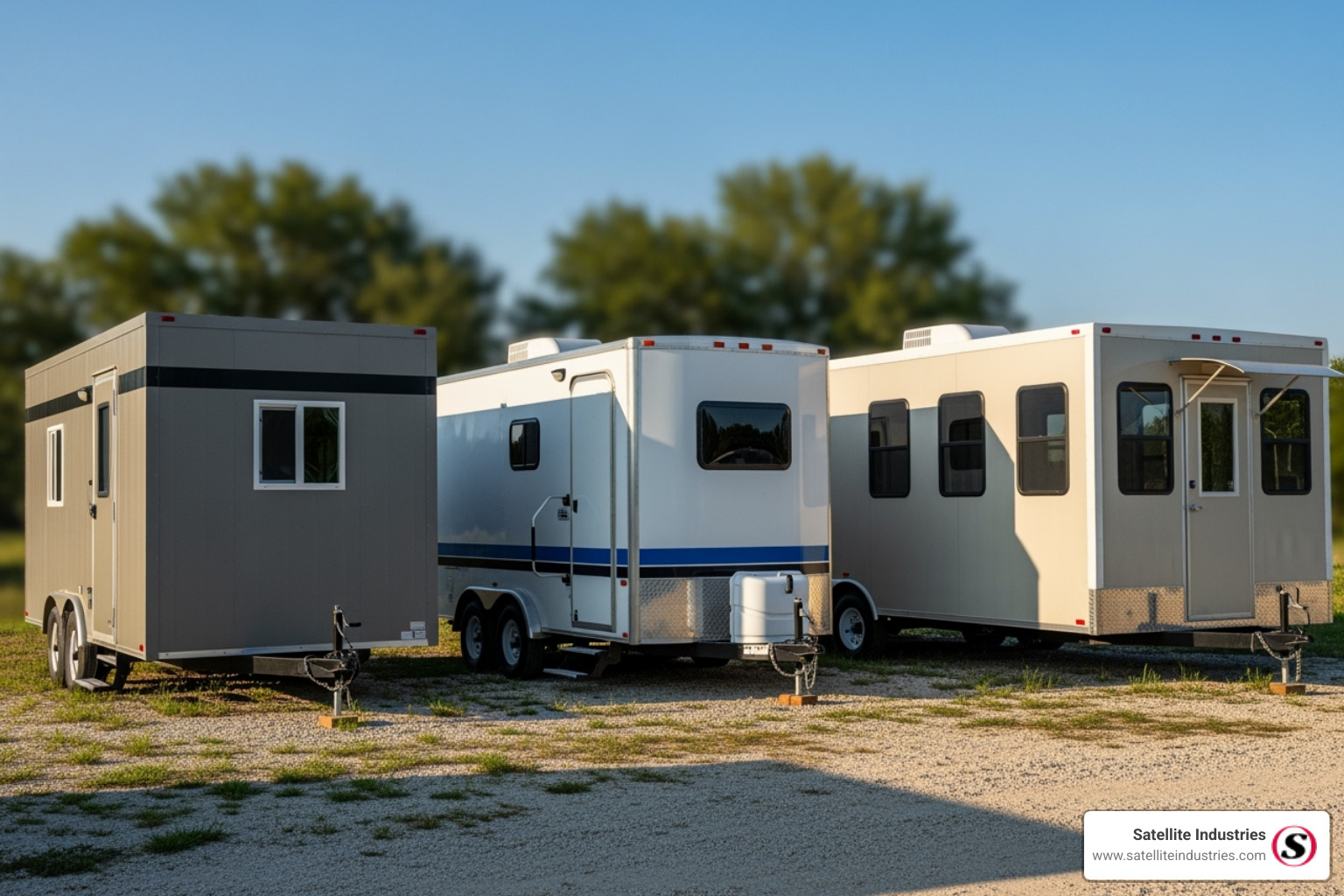
Sleeper units and bunkhouse trailers are the backbone of workforce housing. They range from private rooms with en-suites to multi-occupancy bunkhouses. The best units feature individual climate control, secure entry, and comfortable common areas. This “home away from home” experience is valuable, as quality sleep directly impacts productivity on expensive projects where downtime is costly.
Mobile shower and locker room trailers maintain hygiene in temporary settings. Modern shower trailers offer up to 16 private stalls with continuous hot water, and locker room trailers combine changing and shower facilities. They are invaluable for events, disaster relief, and industrial sites.
Mobile offices and specialized work units go beyond basic site offices. They can house complex engineering operations, control rooms, or workshops. Specialized units include mudlogging labs for oil and gas or commercial kitchens.
Applications span numerous industries. Construction uses them for offices and worker housing. The energy and mining sectors rely on them for remote accommodation. Event and hospitality create pop-up facilities for festivals, while disaster relief deploys them as emergency shelters. Educational institutions even use them for temporary classrooms.
Key Benefits Compared to Traditional Structures
The advantages over traditional construction are clear. Speed is the most compelling benefit: portable units can be operational within hours of delivery, while conventional buildings take months or years.
This speed translates to cost savings. Industry data shows portable units can reduce project costs by up to 30% through lower labor costs, shorter timelines, and no weather-related delays.
Flexibility and scalability are game-changers. Need more housing? Add more units. Project ending? Relocate the units instead of demolishing them. This adaptability is invaluable for rental businesses with project-based demands.
Reduced site disruption is another key benefit. Since units arrive nearly complete, on-site work is minimal, which is ideal for sensitive environments like hospitals or schools.
Reusability and sustainability are also key. Quality units serve multiple projects over many years, reducing material waste compared to single-use traditional construction.
FeaturePortable UnitsTraditional ConstructionCostUp to 30% savings on overall project costsHigher upfront costs, less predictableTime to Deploy40-50% faster, immediate occupancyMonths to years, lengthy planning and constructionFlexibilityEasily relocated, reconfigured, and scaledFixed location, difficult and costly to modify or move
Essential Features and Customization Options for Portable Accommodation Units
Modern portable units offer features rivaling traditional buildings. Understanding these options helps rental businesses satisfy demanding customers.
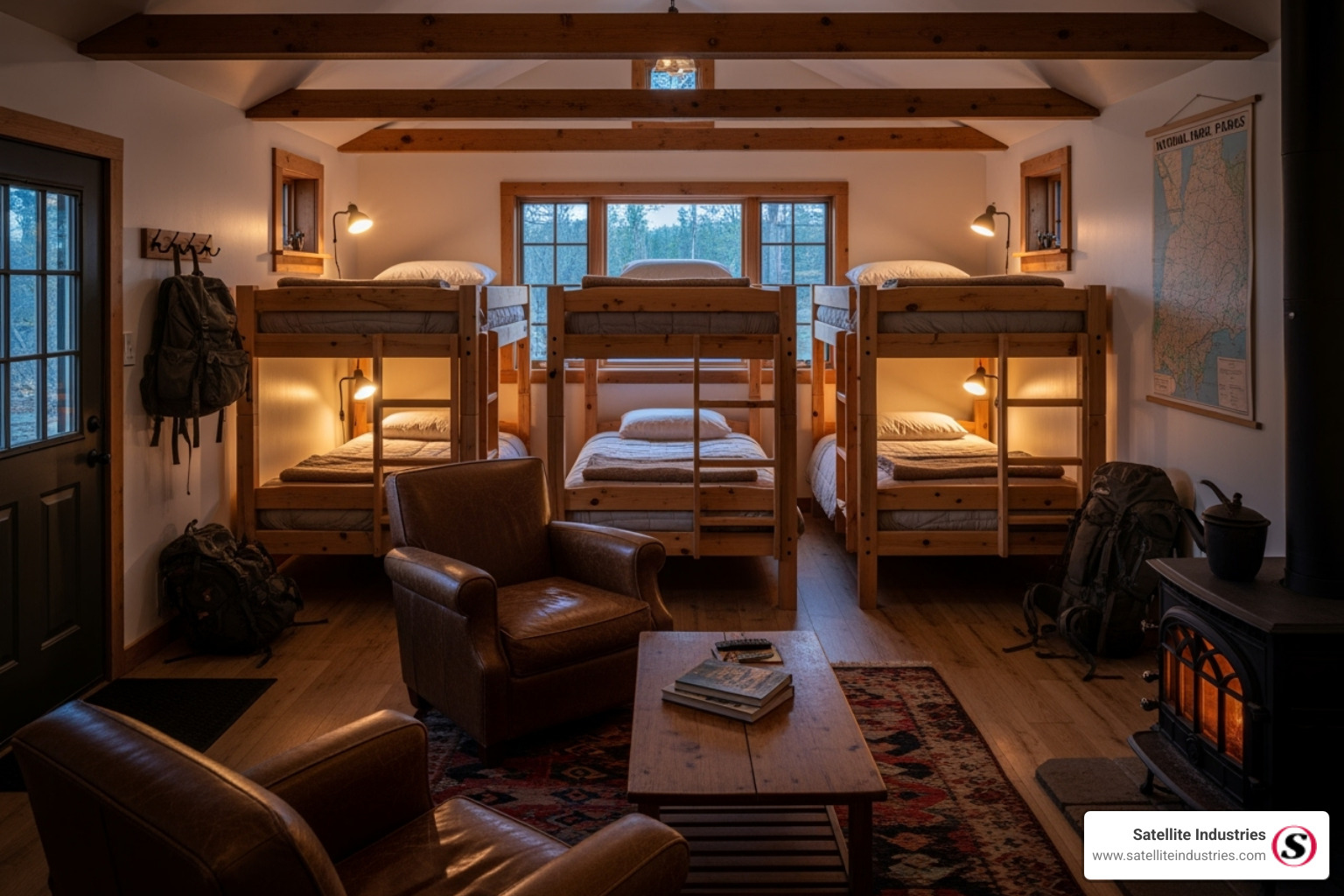
Climate control is essential. Quality units have robust HVAC systems for any condition. Some include dual systems for redundancy, which is crucial in extreme climates where failure is dangerous.
Privacy and security have evolved. Modern units offer private rooms, lockable doors, pin-pad entry, and reinforced windows. En-suite bathrooms transform them from basic shelters into comfortable living spaces.
Kitchen and dining facilities range from simple kitchenettes to full commercial galleys. On-site meal preparation improves worker satisfaction and simplifies logistics.
Durability and construction quality are key differentiators. Look for steel frames, high-grade insulation (e.g., polyurethane foam), and weather-resistant finishes. Quality units withstand extreme temperatures (-30°C to +60°C) and high winds (up to 80 km/h) when anchored.
Connectivity and modern amenities are expected. Units should have power outlets, USB ports, Wi-Fi, and LED lighting. These features make a significant difference in worker satisfaction.
Customization allows rental businesses to serve specialized markets. Options include layout modifications, size variations, and specialized equipment integration for medical or industrial machinery. Accessibility features like ADA-compliant bathrooms and ramps ensure compliance, while branding options allow customers to maintain their visual identity.
Logistics of Deploying Portable Accommodation Units
Successful deployment requires careful planning. Understanding logistics helps rental businesses provide better service and avoid costly delays.
Site preparation is foundational. Units need level, stable ground (a concrete pad or prepared gravel base) with adequate space for anchoring and maintenance. Poor preparation leads to structural and utility issues.
Transportation logistics vary by unit size. Smaller units ship assembled, while larger ones may need specialized hauling. Innovative designs allow for more efficient transportation, reducing costs and environmental impact.
Utility connections need coordination. Electrical service is typically single-phase 230V (63-100 amp). Water supply (2-4 bar pressure) can connect to standard hoses, hydrants, or water tanks.
Waste management uses separate pipes for toilet (110mm) and grey water (40mm). These connect to municipal systems or portable effluent tanks that need regular servicing.
Permitting and regulatory compliance can be tricky. Requirements vary by location, unit size, and duration. Smart rental businesses stay current on local regulations to avoid delays.
Sustainability and Long-Term Considerations
The environmental benefits of portable units align with corporate sustainability goals. This is a compelling selling point for eco-conscious customers and reduces long-term costs for rental businesses.
Reduced construction waste is a key advantage. Factory construction minimizes material waste and allows for efficient recycling, unlike on-site construction.
Reusability and longevity are sustainable advantages. Well-built units serve multiple projects over many years, reducing raw material demand and landfill waste. This requires choosing quality, multi-deployment units over disposable ones.
Energy-efficient design is becoming standard. Features like superior insulation (e.g., polyurethane foam), LED lighting, and efficient HVAC systems reduce operational costs and environmental impact, with some units using as little as 9.6kWh daily.
The human element is crucial for customer satisfaction. The importance of quality sleep for productivity is well-documented; poor sleep harms performance, safety, and satisfaction. Quality units create comfortable, quiet environments for restful sleep. This protects your customers’ investment in their workforce and maintains project productivity.
Understanding limitations is key. Units require proper site prep and utility access, and navigating local regulations can be complex. However, these challenges are minor compared to the complexity of traditional construction.
The Future of Portable Accommodation and Your Business
The portable accommodation units industry is changing, with remarkable opportunities ahead. After nearly three decades in this market, I can confidently say we’re entering a golden age of growth and innovation.
The numbers are compelling: the modular construction market is projected to grow from USD 101.2 billion in 2022 to USD 173.4 billion by 2029, an 8.0% CAGR. This growth is driven by the need for flexible, cost-effective solutions.
Partnering for Success in the Portable Accommodation Market
What’s driving this growth? A perfect storm of forces: more remote work sites, larger construction projects, and intensifying disaster response needs. Crucially, businesses now recognize that comfortable, well-rested workers are productive.
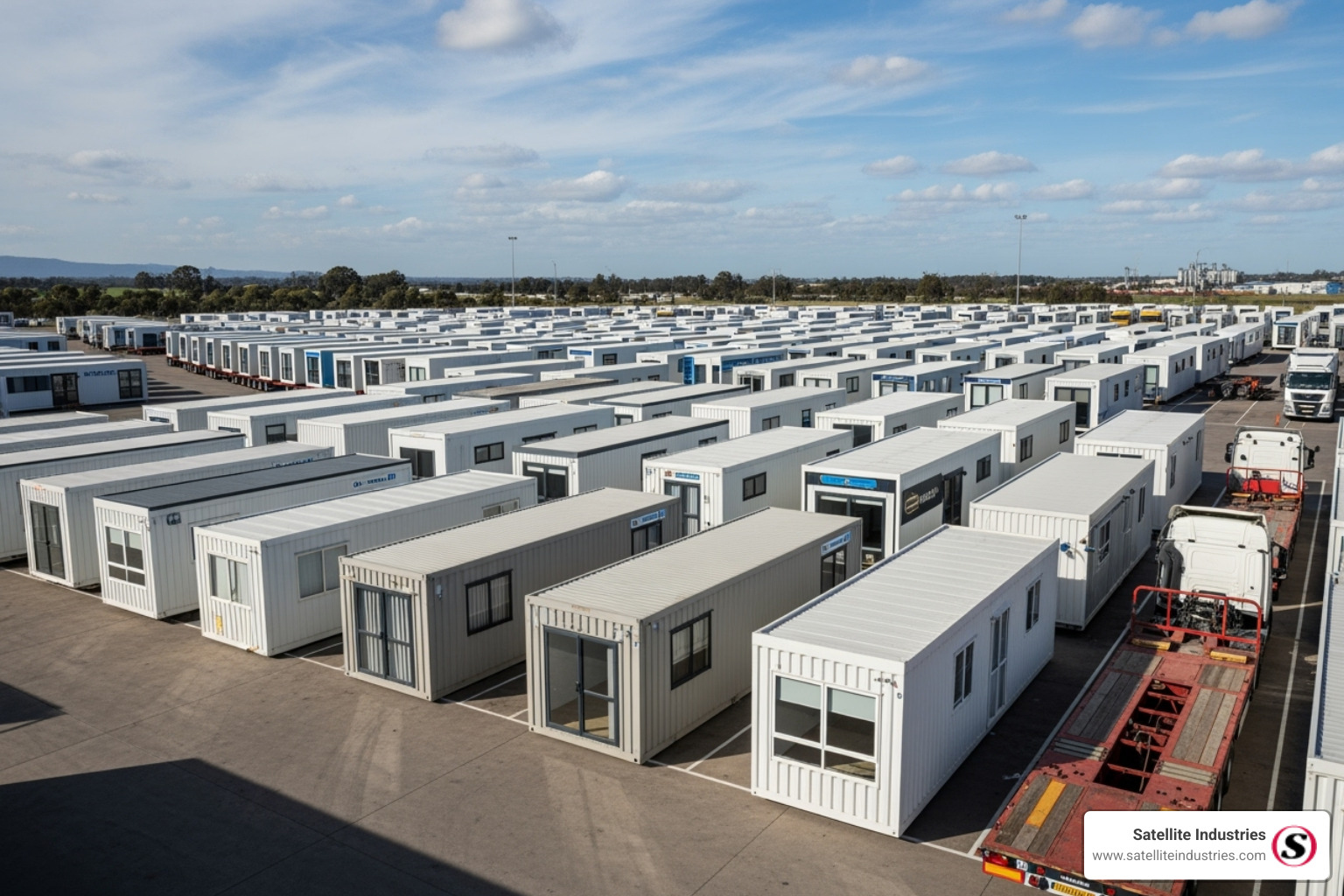
For rental fleet owners, this growth is a tremendous opportunity. Success isn’t just about availability—it’s about having the right units that perform consistently.
The future of portable accommodation units is being shaped by several trends. Technological innovation is introducing smart monitoring, energy-efficient designs, and tougher, more sustainable materials. Units can now withstand extreme weather while maintaining comfort.
Customization is becoming the norm. Customers expect units custom to their needs, from specialized equipment integration to branded exteriors. The one-size-fits-all approach is obsolete.
Sustainability is driving innovation. Customers want units that minimize environmental impact through energy efficiency, recyclable materials, and maximum reusability.
Most importantly, comfort standards are rising. Basic shelter is no longer enough. Today’s workforce expects amenities like private bathrooms, climate control, reliable Wi-Fi, and a home-like feel.
This evolution presents opportunities and challenges for rental fleet operators. The opportunity is to meet demand with superior products that command premium rates. The challenge is ensuring your units deliver the reliability modern applications demand.
This is where advanced engineering for durability and user-friendliness is crucial. At Satellite Industries, we know every unit represents your reputation. When a project depends on reliable accommodation, there’s no room for failure.
Our manufacturing focuses on what matters to rental operators: robust construction for repeated transport, user-friendly features to minimize service calls, and durable materials for long-term functionality.
We’ve spent decades perfecting these elements because your success depends on flawless performance. Your customers need portable accommodation units they can count on, regardless of the application.
This market is global, with opportunities everywhere. But all customers share a fundamental need: reliable, comfortable, and efficient accommodation.
As the industry grows, we’re committed to being your manufacturing partner. We create high-quality portable accommodation units to help you build a successful, profitable rental fleet.
The future of portable accommodation is bright, and we’re here to help you capture every opportunity it offers.
Latest from the Satellite Industries Blog
Need Help {Finding the Right Sanitation Solution?}
Satellite Industries is the largest manufacturer of portable restrooms, restroom trailers, restroom trucks, septic trucks, slide-ins, unit haulers, vacuum technology, modular solutions, consumables and deodorizers.