Stay Warm: Your Guide to Portable Hand Washing Stations with Hot Water
Why Hot Water Hand Washing Stations Are Essential for Your Business
A portable hand washing station with hot water is a self-contained unit that provides warm running water for hand hygiene without requiring permanent plumbing or electrical connections. These stations typically feature:
- Fresh water tank (5-24 gallons) and waste water tank (6-25 gallons)
- Heating system (electric, propane, or pre-heated options)
- Water pump with foot-pedal or sensor activation
- Temperature control ranging from 90-160°F
- Soap dispensers and paper towel holders
- Mobile design with locking casters for easy transport
The demand for portable hot water hand washing solutions has grown significantly since 2020, driven by increased hygiene awareness and stricter health code requirements across industries. Whether you’re serving construction sites, outdoor events, or food service operations, hot water stations offer superior cleaning power compared to cold water alternatives – removing oils, grease, and pathogens more effectively while improving user comfort and compliance.
“Do you like to wash your hands after going to the restroom? We at HHH Sanitation do too and we can help you with that,” reflects the growing recognition that proper hand hygiene requires both accessibility and comfort to ensure consistent use.
I’m Michelle Amelse, Vice President of Marketing and Customer Success at Satellite Industries, with over 26 years of experience in the portable sanitation industry including expertise in portable hand washing station with hot water solutions. My background in strategic marketing and manufacturing operations has given me deep insights into what distributors and rental operators need to succeed in this growing market.
Understanding the Portable Hand Washing Station with Hot Water
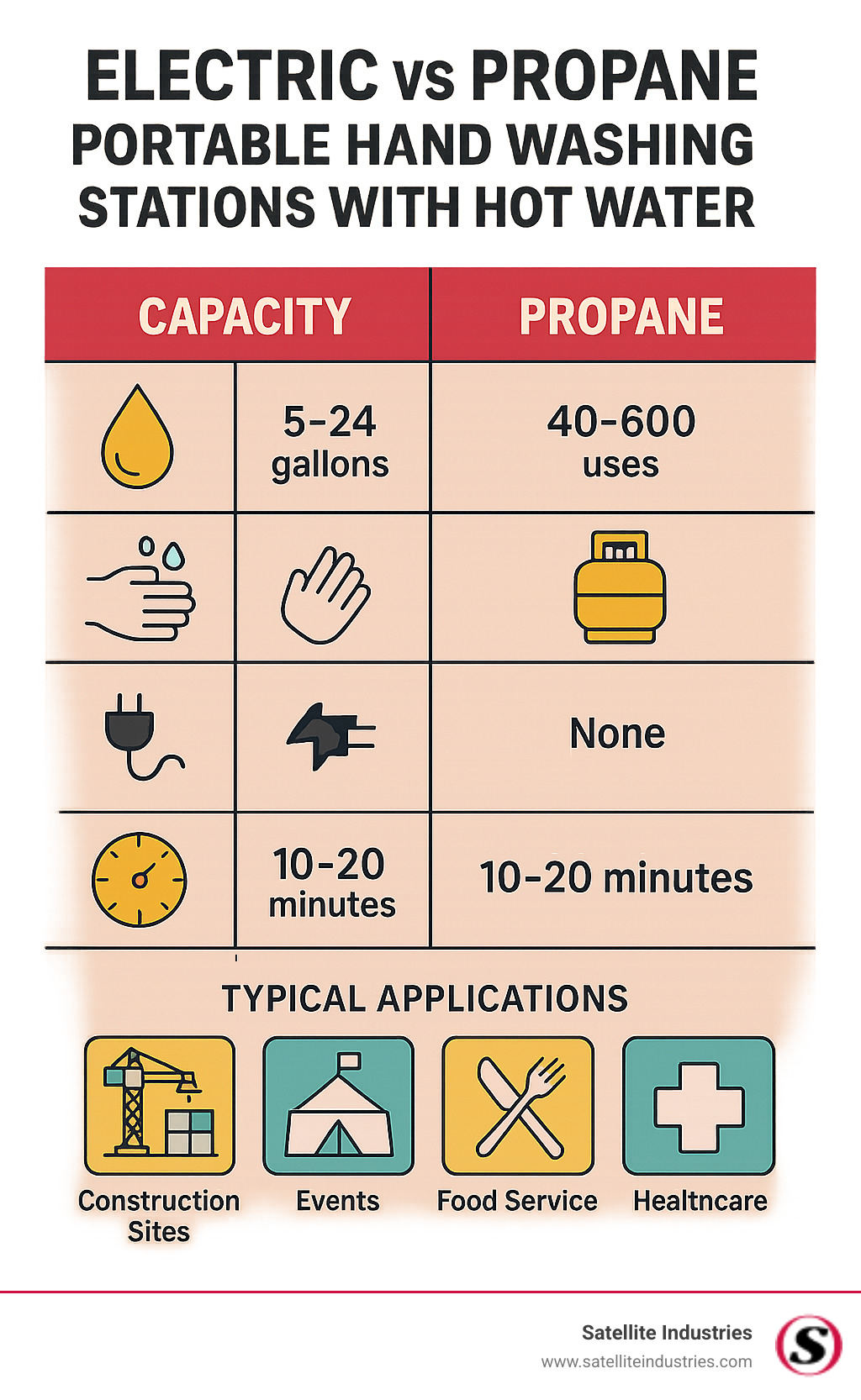
Think of a portable hand washing station with hot water as your complete hygiene solution in a box. These self-contained units bring together everything you need for proper hand washing – fresh water storage, waste collection, heating power, and pressurized delivery – all without requiring a single connection to existing plumbing.
The beauty of these stations lies in their engineering simplicity. Most units house a fresh water tank holding anywhere from 5 to 24 gallons, paired with a slightly larger waste tank that accounts for the full water capacity plus extra room for soap and debris. The magic happens when you add the heating element – whether it runs on electricity, propane, or battery power – working alongside a pressure pump to deliver perfectly heated water through a standard faucet or foot-pedal activated system.
What makes these units especially valuable for distributors is their independence. Your customers can set them up anywhere – construction sites, outdoor events, food trucks – without worrying about finding water lines or electrical hookups.
What Is It & Why Hot Water Matters
Here’s something that might surprise you: hot water isn’t just about keeping users comfortable (though that certainly helps). According to CDC guidelines, warm water actually dissolves oils, grease, and soap more effectively than cold water, leading to better pathogen removal. When people aren’t shivering over a cold faucet, they’re more likely to wash their hands for the full 20 seconds recommended by health experts.
The science backs this up too. Water temperatures between 100°F and 120°F provide optimal cleaning without risking burns. This sweet spot effectively breaks down oils and dirt while activating soap for maximum antimicrobial action. For your food service customers, hot water often isn’t optional – it’s mandatory under local health codes.
The thermal comfort factor can’t be overlooked either. Users who find hand washing pleasant are users who actually wash their hands properly. It’s human nature.
How Does a Portable Hand Washing Station with Hot Water Work?
The operation is beautifully straightforward. When someone activates the foot pedal or sensor, an electric or battery-powered pump draws fresh water from the storage tank. The water passes through an inline heater – either an electric coil or propane-fired heat exchanger – before flowing through the faucet at just the right temperature.
A built-in thermostat keeps the heating element in check, maintaining consistent water temperature throughout the day. Flow-rate controls ensure your customers get maximum washes per fill, which translates directly to better rental economics.
Electric units typically use 1500W heating elements that provide on-demand hot water, while propane systems use burners that heat water as it passes through a heat exchanger. The used water flows into the grey-water tank, which is designed with slightly larger capacity than the fresh tank to handle the full volume plus soap residue.
The whole system is designed for reliability and ease of maintenance – critical factors when your reputation depends on equipment that works every time.
Main Types & Components You’ll Meet in the Field
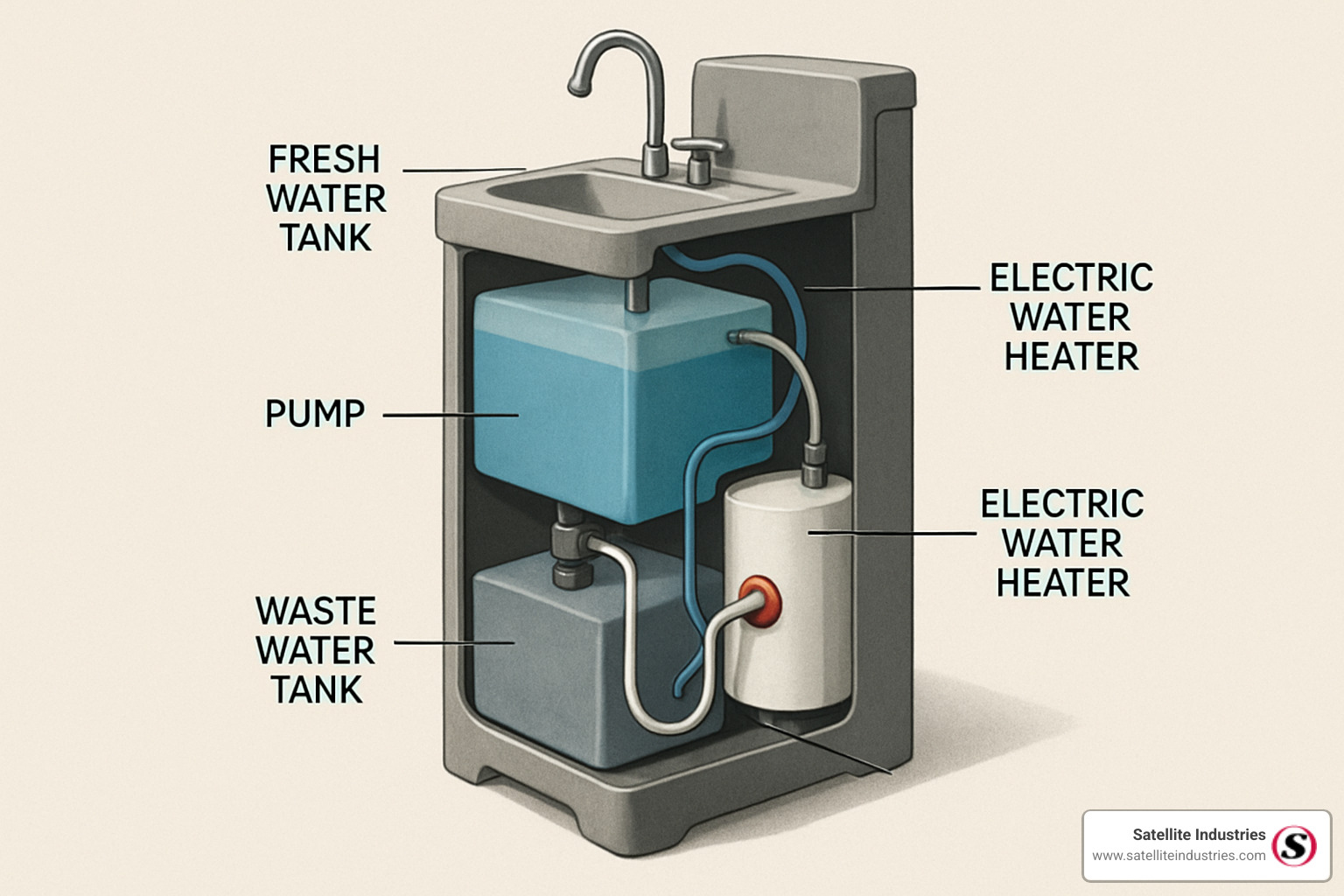
When you’re shopping for portable hand washing stations with hot water for your rental fleet, you’ll encounter several distinct types – each designed for different situations your customers face. Think of it like choosing the right tool for the job: what works perfectly at an indoor trade show might struggle on a windy construction site.
The beauty of this market is that there’s truly something for every application. Your customers will appreciate having options that match their specific needs, whether they’re running a food truck, managing a construction crew, or organizing an outdoor wedding.
Electric & Battery-Powered Units – Indoor Friendly
Electric units are the workhorses of indoor applications. These stations plug into any standard 110V outlet and use 1500W heating elements that heat water quickly and keep it at the perfect temperature all day long. A typical 5-gallon fresh water tank delivers around 64 hand washes – enough for most day-long events without refilling.
Your customers love these units because they’re quiet and consistent. No rumbling engines or gas smells – just reliable hot water whenever someone needs it. The temperature control is precise, and maintenance is minimal. Just remember they need 15-20 amp circuits and should always have GFCI protection for safety.
Battery-powered variants give you the same benefits with the freedom to place them anywhere. They’re perfect for customers who need flexibility but still want the reliability of electric heating. The trade-off is that batteries need regular charging, and heating capacity isn’t quite as robust as plug-in models.
Propane & Hybrid Units – Off-Grid Champions
When your customers are working where there’s no power – or where power is unreliable – propane units save the day. These stations can heat water to 160°F in just 5 seconds using anything from small 16 oz disposable cylinders to 20 lb refillable tanks. The D-cell battery ignition means no pilot lights to worry about, which is a huge relief for safety-conscious customers.
I’ve seen these units perform beautifully on winter construction sites where electric units would struggle. The instant heat and independence from electrical infrastructure make them incredibly valuable for outdoor events, remote job sites, and emergency response situations.
Hybrid units are becoming increasingly popular because they offer the best of both worlds. Your customers can use electric power when it’s available and switch to propane when they need to go off-grid. This flexibility makes them excellent investments for rental fleets serving diverse markets.
Pre-Heated & Gravity-Fed Carriers – Ultra-Light Options
Sometimes simple is better. Pre-heated units with insulated containers (typically holding 3 liters) can be filled with hot water and maintain temperature for 3-5 hours. While they’re limited to about 15 hand washes per fill, they’re perfect for small crews or short-term applications where you need maximum portability.
These gravity-fed systems rely on liftd tanks and simple valve controls. There’s almost nothing to break, which makes them incredibly reliable. The water pressure is lower and capacity is limited, but for customers who value simplicity and dependability above all else, these units are ideal.
Anatomy of a Station
Every quality portable hand washing station with hot water shares the same essential DNA, though the details vary. The heater coil or heat exchanger is the heart of the system, working with fresh water tanks (ranging from 5-24 gallons) and grey water tanks (usually 1 gallon larger) to keep everything flowing smoothly.
The pump system creates the pressure needed for proper flow, while the faucet and soap dispenser provide the user interface your customers’ clients actually interact with. Quality units include heavy-duty casters with locking mechanisms for easy transport and stable operation.
Look for stations with visual gauges for tank levels, temperature indicators, and easy-connect fittings that make maintenance straightforward. These features might seem small, but they make a huge difference in day-to-day operation and customer satisfaction.
Key Features Buyers Should Compare Before Stocking Up
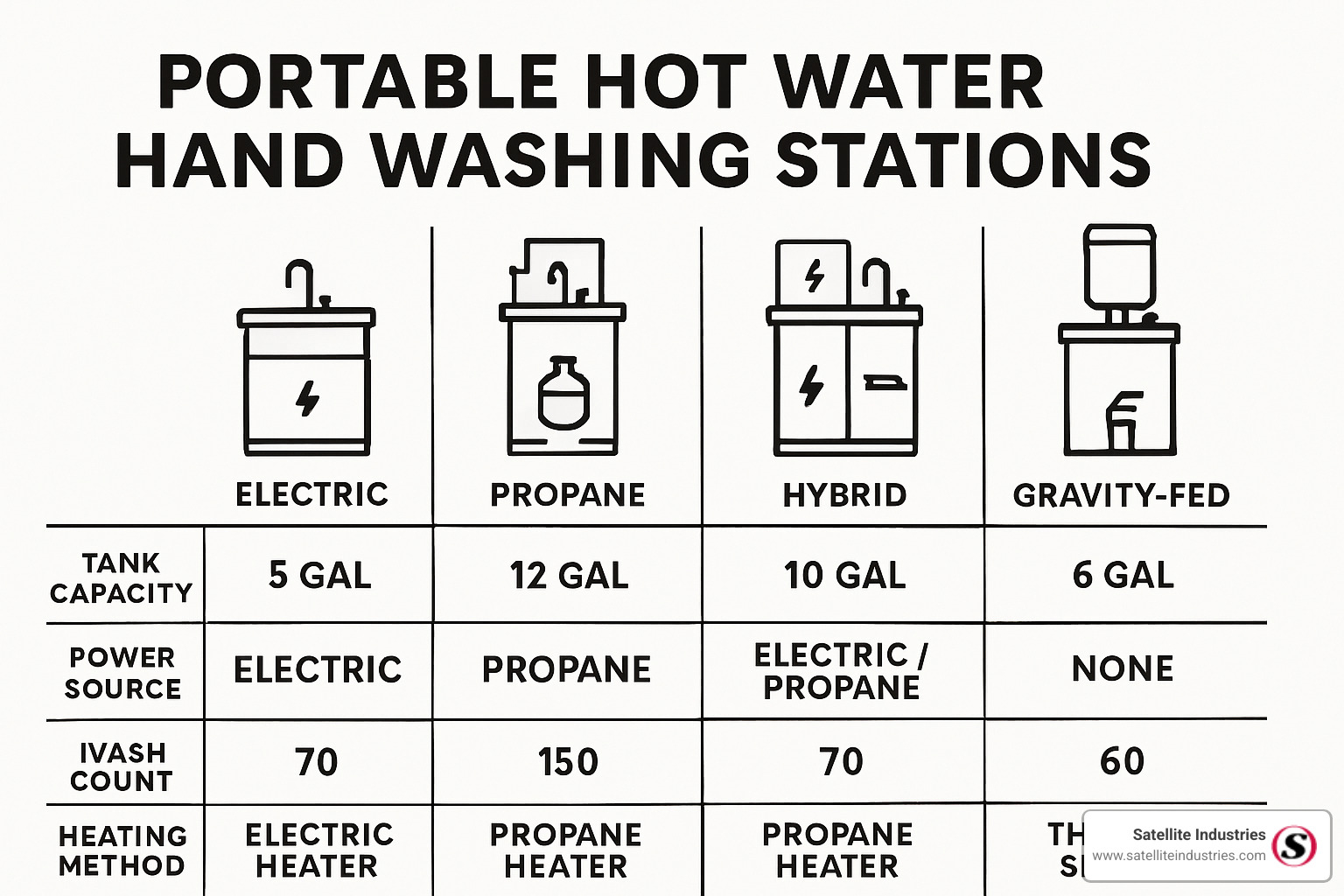
Building a successful rental fleet means knowing which features separate the workhorses from the headaches. After decades of manufacturing portable hand washing station with hot water units, we’ve seen what makes distributors and rental operators successful – and what leaves them dealing with constant service calls.
The smart money focuses on four key areas: capacity matching, safety compliance, build quality, and maintenance simplicity. Get these right, and you’ll have equipment that keeps customers happy and your service costs low.
Sizing Your Needs — Capacity & Wash Count
Think of tank capacity as your service interval insurance. A 5-gallon fresh water tank delivers around 40-64 hand washes, perfect for small crews or events where you can refill daily. Scale up to 24-gallon systems, and you’re looking at 300-600 washes per fill – ideal for busy construction sites or large events where weekly service makes more sense.
The magic happens with flow-control aerators that help you squeeze maximum value from every gallon. These simple devices regulate water flow without making users feel shortchanged. Some units offer adjustable flow rates, letting you dial in the perfect balance between capacity and user satisfaction based on each job’s specific needs.
Safety & Compliance Must-Haves
Safety certifications aren’t just nice-to-have paperwork – they’re your protection against liability and your ticket to premium contracts. NSF certification ensures water contact components meet health standards, while UL listing covers electrical safety. For propane units, CSA approval is essential.
Anti-scald protection keeps water temperature below 120°F at the faucet, preventing burns while maintaining effective cleaning temperatures. Backflow prevention protects the fresh water supply from contamination, and foot-pedal activation reduces cross-contamination compared to hand controls.
Don’t overlook regional requirements like Prop 65 compliance for California operations. Construction sites have OSHA requirements for hand washing facilities, making compliance features a selling point rather than just a checkbox.
Durability & Maintenance Factors
The difference between profit and pain often comes down to construction quality. Stainless steel basins resist corrosion and clean easily, while roto-molded polyethylene tanks handle impacts and UV exposure without cracking. Powder-coated steel frames offer the sweet spot between durability and weight management.
Smart design features like easy-connect fittings and tool-less tank swapping can cut service time in half. Quality units put components where technicians can actually reach them, with clear service points and diagnostic indicators that help troubleshoot problems quickly.
FeatureElectric ModelsPropane ModelsPower Draw1500W (15-20A)D-cell ignition onlyFuel Cost$0.12-0.15/kWh$3-4/20lb cylinderIndoor/OutdoorIndoor preferredAll environmentsStart-up Time2-3 minutesUnder 5 secondsMaintenance IntervalMonthly inspectionWeekly leak check
The table above shows why many operators stock both electric and propane units. Electric models excel indoors with precise temperature control and quiet operation, while propane units dominate outdoor applications with instant heat and fuel independence. Understanding these trade-offs helps you recommend the right equipment for each customer’s specific needs.
Where Hot-Water Stations Shine: Core Applications & Regulations
When you’re in the business of renting portable sanitation equipment, you quickly learn that portable hand washing stations with hot water aren’t just nice-to-have accessories – they’re often the difference between winning and losing contracts. These versatile units have become essential across industries where hygiene meets regulations and user comfort drives repeat business.
Events are one of the fastest-growing markets. Wedding planners won’t settle for cold water when guests pay premium prices for outdoor ceremonies, and festival organizers know comfortable hand-washing keeps attendees happy and health inspectors satisfied.
Food service operations face the strictest requirements, but also offer the most consistent revenue. Food trucks, catering companies, and temporary kitchens need hot water to meet health-department standards and are willing to pay premium rental rates for compliance-ready equipment.
Construction sites provide steady, long-term rentals with predictable service schedules. OSHA requirements create non-negotiable demand, and contractors appreciate equipment that helps them avoid costly fines. Healthcare facilities, schools, and disaster-relief teams depend on reliable hot water for proper sanitation when infrastructure is limited.
Meeting Health Codes & Job-Site Requirements
OSHA regulations are straightforward: construction sites must provide adequate washing facilities with soap and water. While hot water isn’t always explicitly required, workers are far more likely to wash properly when it’s warm.
Local food codes take a harder line. Many jurisdictions demand temperatures between 100 °F and 110 °F at the faucet for food service. Some inspectors perform surprise thermometer checks, making accurate temperature control a necessity, not a luxury.
Service intervals and grey-water disposal also play into compliance. Most health codes require daily service for food operations and weekly service for construction sites, while many municipalities insist on approved disposal sites for waste water.
Calculating ROI for Distributors & Rental Fleets
Purchase prices for quality units range from $2,000 to $5,000, yet rental day rates for hot-water models typically run 20–30 % higher than cold-water alternatives. At standard utilization levels most units pay for themselves within about 90 days.
Additional revenue streams such as soap, paper-towel refills, and scheduled service contracts can add 30–40 % to base rental income, turning these stations into dependable profit centers.
More info about portable sanitation solutions
Operation, Setup & Best-Practice Checklist
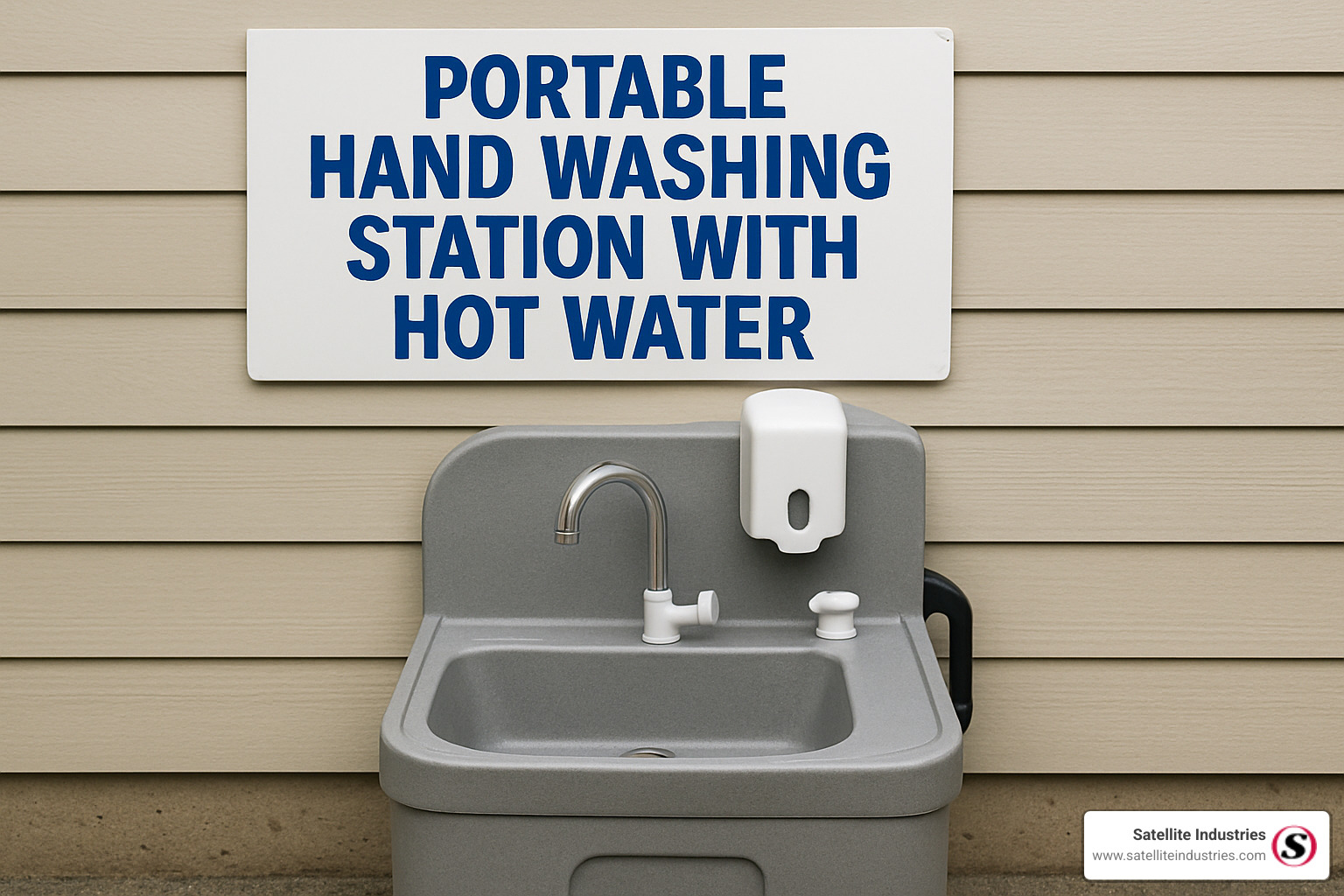
Getting your portable hand washing station with hot water up and running doesn’t have to be complicated. After decades of engineering these systems, we’ve learned that simplicity wins every time – both for your crew setting up the units and for your customers using them.
The beauty of modern hot water stations lies in their plug-and-play design. No specialized tools, no complex procedures, just straightforward steps that anyone can follow. This simplicity translates directly to lower labor costs and fewer service calls for your rental operation.
Quick Setup in Under 5 Minutes
Start by wheeling your unit to the desired location and locking the casters for stability – there’s nothing worse than a wobbly hand washing station. The fresh water tank fills through a standard garden hose connection, making refills quick and familiar for any crew member.
For electric units, you’ll need a dedicated 20-amp circuit with GFCI protection. Don’t skimp on electrical safety – water and electricity demand respect. Propane units require a secure cylinder connection followed by a simple leak test using soap solution around all fittings.
Prime the pump by running water briefly to remove air from the lines, then test your temperature controls. Most units come factory-set between 100°F and 110°F for optimal user comfort and safety. The visual gauges should show proper tank levels and system pressure before you call it ready.
The whole process takes less time than grabbing coffee, and your customers will appreciate units that work flawlessly from day one.
Daily Maintenance & Winterization Tips
Daily operations require just a few minutes of attention. Check tank levels morning and evening, test temperature controls to ensure consistent performance, and do a quick visual inspection for leaks or damage. It’s like checking the oil in your truck – simple preventive care that saves major headaches.
Weekly service involves sanitizing water lines with approved quaternary sanitizer, emptying and cleaning waste tanks thoroughly, and inspecting all connections for wear. Replace any questionable fittings before they fail in the field.
Winterization becomes critical when temperatures drop below freezing. Drain all water lines and tanks completely, then add RV antifreeze to prevent freeze damage. Replace O-rings annually to maintain proper seals – they’re inexpensive insurance against expensive repairs.
Store units in heated areas when possible, or consider electric heating elements designed for freeze protection. A little preparation in fall saves a lot of repair bills in spring.
Safety First: Electrical & Propane Precautions
Electrical safety starts with GFCI protection and proper grounding. Inspect power cords regularly for damage, and never operate units with compromised electrical components. Keep all connections dry and properly sealed – water finds its way into the smallest gaps.
Propane systems demand leak testing before each use with soap solution around all connections. Maintain proper ventilation around propane units, and never operate them in enclosed spaces without adequate clearance for combustion air and ventilation.
User temperature should never exceed 120°F to prevent scalding injuries. Most quality units maintain temperatures between 100°F and 110°F for optimal cleaning effectiveness and user comfort. This temperature range provides excellent pathogen removal while keeping users happy and safe.
A well-maintained unit is a profitable unit. These simple procedures protect your investment while ensuring your customers get reliable service every time.
Frequently Asked Questions about Portable Hand Washing Stations with Hot Water
Over the years, we’ve fielded thousands of questions from distributors and rental operators about portable hand washing stations with hot water. These three questions come up most often, and the answers can make or break your rental business profitability.
How many washes can I expect per 5-gallon fill?
Here’s the math that matters for your service schedules: a standard 5-gallon fresh water tank delivers 40-64 hand washes under normal conditions. The wide range depends on your users and your equipment setup.
Construction workers washing off heavy grime might use more water per wash, bringing you closer to that 40-wash minimum. Office workers at an outdoor corporate event typically use less, pushing you toward the 64-wash maximum. Units with flow restrictors and aerators help you hit those higher numbers consistently.
The secret sauce? User education. A proper 15-second wash with soap gives excellent hygiene results while maximizing your tank capacity. Some of our most successful rental operators post simple instruction signs that actually increase wash counts per fill by 20-30%.
What power or fuel source do I need on a remote site?
Remote sites are where hot water stations really prove their worth – and where power planning becomes critical. Electric units need 110V service with 15-20 amp capacity, plus GFCI protection for safety. If your customer has generator power or temporary electrical service, electric units offer the most precise temperature control.
Propane units are the champions of truly remote locations. They run on standard cylinders from 16 oz disposable bottles up to 20 lb refillable tanks. A 20-pound cylinder typically powers 200-400 washes, depending on water temperature settings and ambient conditions.
Battery-powered units give you maximum flexibility for short-term applications, though they require regular charging and may have limited heating capacity. They’re perfect for day-long events where you can’t guarantee power availability.
Are hot-water stations required for food-service permits?
This question can save or sink a rental contract, so here’s the straight answer: most food service applications absolutely require hot water for proper sanitation. Local health departments typically specify minimum temperatures between 100°F and 110°F for hand washing, with some jurisdictions requiring even higher temperatures for dish washing.
The requirements vary significantly by location – what passes in rural counties might fail inspection in major metropolitan areas. Always check local codes before bidding food service events, because showing up with cold water units to a catered wedding can be an expensive mistake.
Smart distributors keep copies of local health code requirements and use them as selling tools. When you can show a potential customer exactly why they need hot water stations for permit compliance, you’re not just renting equipment – you’re providing peace of mind and regulatory protection.
Conclusion
The portable hand washing station with hot water market represents more than just a business opportunity—it’s a chance to provide essential hygiene solutions that genuinely improve people’s experience. Whether someone is washing paint off their hands at a construction site in January or freshening up at an outdoor wedding, hot water turns a quick rinse into proper hand hygiene.
At Satellite Industries, we’ve spent decades perfecting these units. From electric models that deliver consistent temperatures indoors to propane-powered stations that heat water in seconds at remote job sites, every model reflects our commitment to advanced engineering, durability, and user-friendliness.
Your customers will appreciate the comfort and code compliance hot water provides, and you’ll appreciate the strong ROI these units deliver.
Latest from the Satellite Industries Blog
Need Help {Finding the Right Sanitation Solution?}
Satellite Industries is the largest manufacturer of portable restrooms, restroom trailers, restroom trucks, septic trucks, slide-ins, unit haulers, vacuum technology, modular solutions, consumables and deodorizers.