
Your Guide to Portable Toilets: Construction, Outdoor Adventures, and More
Why Portable Toilets Are Essential for Construction Sites
A portable toilet for construction must be durable, compliant, and reliable. For rental fleet owners, selecting the right units is critical for client satisfaction and operational efficiency.
Key Requirements for Construction Portable Toilets:
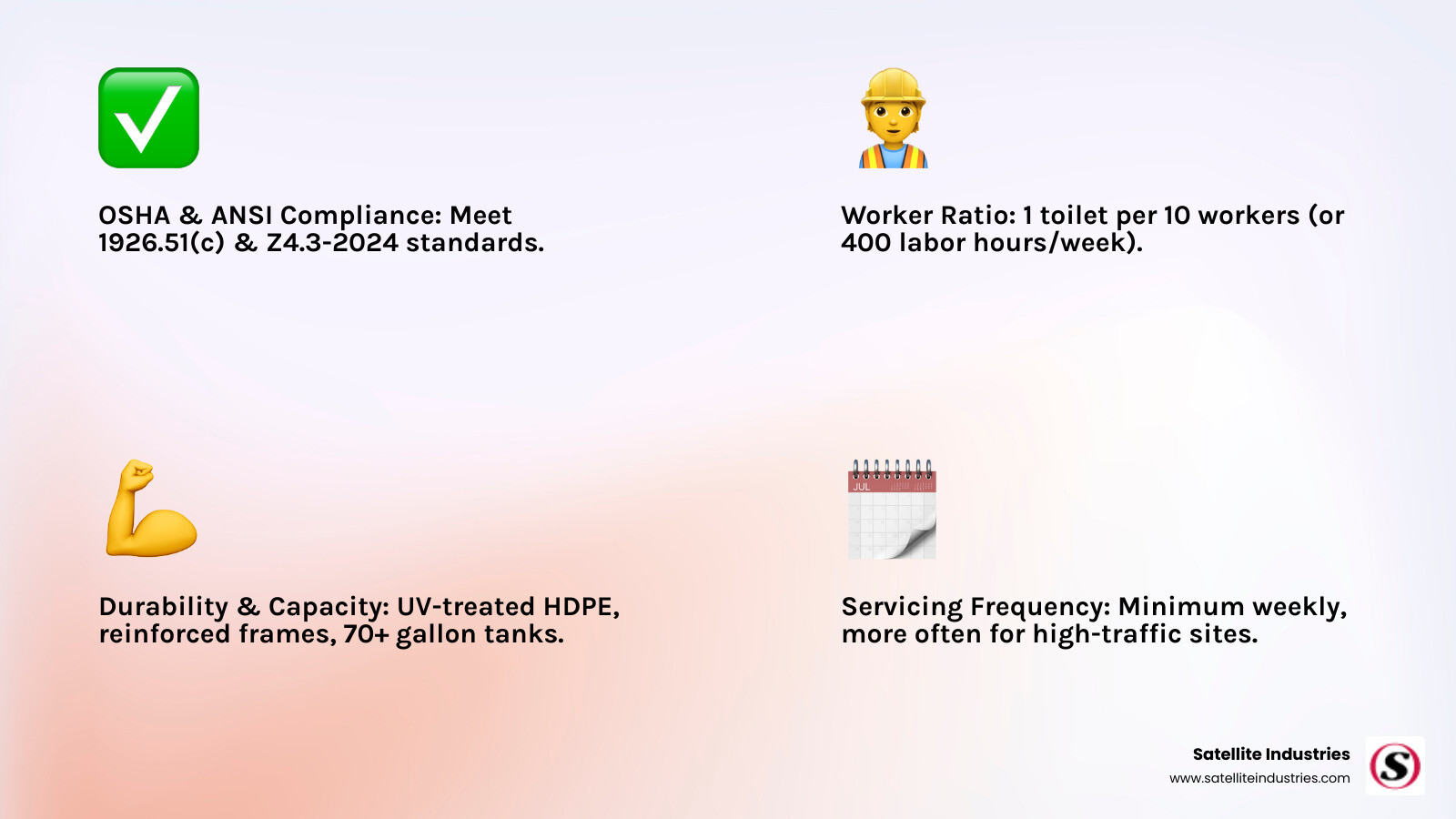
- Compliance: Meet OSHA 1926.51(c) and ANSI Z4.3-2024 standards
- Quantity: 1 unit per 10 workers (or per 400 labor hours/week)
- Features: UV-treated HDPE construction, 70+ gallon tanks, reinforced frames
- Servicing: Weekly minimum, more frequent for high-traffic sites
- Specialized Units: High-rise models, ADA-compliant options, units with integrated sinks
Construction sites demand sanitation that withstands harsh conditions and meets strict regulations. The right units combine robust engineering with practical features. Durability handles heavy use and weather, adequate tank capacity reduces servicing costs, and compliance prevents costly job site shutdowns.
Your clients—construction managers and contractors—judge your fleet on reliability, cleanliness, and your ability to provide specialized solutions like crane-liftable or ADA-accessible restrooms.
I’m Michelle Amelse, VP of Marketing and Customer Success. With over 26 years in portable sanitation, my experience in manufacturing and account management provides deep insight into what rental operators and their clients need for a successful project.
Introduction to Modern Portable Sanitation
The portable sanitation industry has evolved far beyond simple outhouses. Today’s modern portable toilets are sophisticated, hygienic solutions that are critical for worker productivity, site hygiene, and client satisfaction.
A “one-size-fits-all” approach is no longer sufficient. A rugged portable toilet for construction must endure harsh conditions, while an event unit may prioritize aesthetics. This diversity highlights the need for a well-rounded rental fleet that can meet specific client demands.
Our goal is to provide you with durable, easy-to-service units that are compliant with regulations and exceed customer expectations. A clean, well-maintained portable toilet reflects positively on your service and contributes to the success of your clients’ projects.
Choosing the Right Portable Toilet for Construction and Demanding Sites
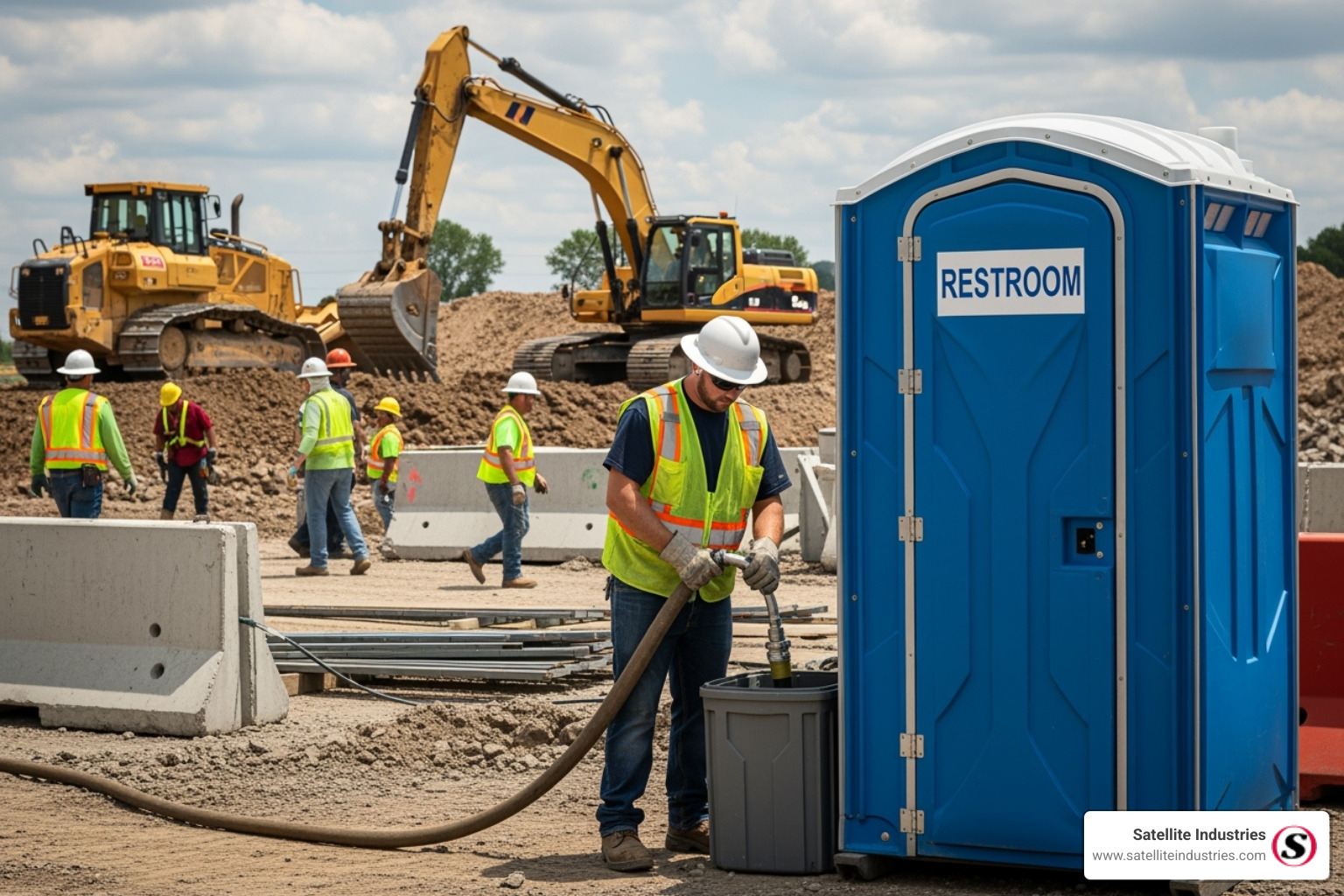
Construction sites are tough on equipment, and portable toilets are no exception. Your rental fleet needs units that can handle heavy daily use, frequent relocations, and extreme weather.
Beyond durability, a quality portable toilet for construction must meet strict regulatory requirements to protect worker safety. This means offering units that are tough, compliant, and practical. Investing in well-engineered units designed for construction leads to fewer service calls, happier clients, and a stronger bottom line. Let’s review what makes a construction portable toilet effective.
Meeting Regulations and Calculating Site Needs
Compliance isn’t optional on a job site. OSHA regulations require adequate sanitation, and violations can lead to fines or shutdowns. As a rental provider, your expertise here is invaluable.
OSHA 1926.51(c) points to the ANSI Z4.3-2024 standard for specific guidance. Understanding these regulations helps you provide solutions that keep projects running smoothly.
The most common guideline is one portable toilet for every 10 workers. The ANSI standard refines this, specifying one non-flushing toilet per 10 workers for cumulative work under 400 hours per week, and one hand wash facility for every 20 workers. Service is required at least weekly, though high-traffic sites need more frequent attention to maintain cleanliness.
Labor hours are key for accurate planning: a 40-hour work week for 10 workers equals 400 labor hours, the baseline for one unit. For more details, clients can reference the official regulations at https://www.osha.gov/laws-regs/regulations/standardnumber/1926/1926.51.
While not always required, offering gender-separate facilities can significantly boost worker comfort and morale.
Here’s a helpful reference guide for planning:
Number of WorkersRequired Portable Toilets (Non-Flushing)Required Hand Wash Stations1-1011 (if > 20 workers or > 400 hrs)11-202121-303231-404241-505351-6063(Add 1 toilet per 10 workers thereafter)(Add 1 hand wash per 20 workers thereafter)
Note: This table provides general guidance based on a 40-hour work week. Specific projects, local regulations, and cumulative labor hours may require more units or more frequent servicing. Always consult current OSHA and ANSI guidelines.
Our recommendation: Go slightly above the minimum. Extra units stay cleaner longer, reducing emergency service calls and improving customer satisfaction.
Key Features of a High-Quality Portable Toilet for Construction
A flimsy unit won’t survive a construction site. We engineer our units with specific features to address real-world challenges.
- Durability and Materials: High-density polyethylene (HDPE) is the gold standard. This robust plastic resists impacts, and when UV-treated, it won’t fade or become brittle in the sun. Reinforced metal frames add structural integrity for lifting and moving.
- Tank Capacity: A portable toilet for construction should have at least a 70-gallon tank. Larger tanks mean fewer service visits, lowering your labor costs and reducing site disruption.
- Vandal Resistance: Features like robust door latches, recessed handles, and durable interior components help units withstand both accidental damage and intentional misuse, extending their lifespan.
- Ease of Cleaning: Smooth, non-porous surfaces, non-slip floors that drain efficiently, and simple interior designs make servicing faster, safer, and more thorough.
- Ventilation: Well-designed wall vents create natural airflow that reduces odors between services, greatly improving the user experience.
These units are built to face dust, mud, and constant use, remaining functional and presentable throughout long projects.
Specialized Units for Unique Construction Challenges
Not all construction sites are easily accessible. Specialized portable toilets give you a competitive advantage by solving unique challenges.
- High-Rise & Crane-Liftable Units: For upper floors or inaccessible areas, these units are essential. Our Highrise model is compact (33.5″ wide) to fit through standard doorways and elevators, featuring casters for easy maneuvering. Reinforced frames with steel-cabled lift points allow for safe crane hoisting. Despite their smaller footprint, they include features like a 38-gallon tank and an internal urinal to minimize service trips.
- ADA-Compliant Restrooms: Often legally required, these units ensure accessibility for all workers. They feature wider doorways, interior grab bars, and ample space for wheelchair maneuverability. Offering ADA options opens your business to government and institutional contracts.
- Units with Integrated Sinks & Flush Systems: For added convenience and comfort, some units come with built-in sinks for immediate handwashing. Flushable units offer a more familiar restroom experience, which is highly valued on long-term projects or for office staff areas.
By adding these specialized options to your fleet, you move from simply renting toilets to providing comprehensive solutions that make complex projects possible.
Expanding Your Rental Fleet: Beyond the Basics
Standard portable toilet for construction units are the workhorses of your fleet, but diversifying your inventory provides a true competitive advantage. Construction managers seek comprehensive sanitation solutions to keep workers healthy and productive.
By expanding beyond basic units, you become a go-to partner for any sanitation challenge. Let’s explore how handwashing stations, restroom trailers, and shower units can help you capture more market share and deliver superior service.
The Importance of Handwashing Stations
On many construction sites, handwashing stations are as crucial as the toilets. Workers are exposed to dirt and chemicals, and proper handwashing prevents the spread of contaminants.
The ANSI Z4.3-2024 standard requires at least one hand wash facility for every 20 workers (under 400 cumulative hours/week). A practical approach is to place one station for every four toilets to ensure easy access.
The benefits are clear:
- Reduces Germ Spread: Fewer sick days mean more consistent productivity for your client.
- Boosts Worker Morale: Access to clean water and soap shows workers they are valued.
Our handwashing stations feature foot-pump operation for hands-free use and include soap and paper towel dispensers. Renting for $150–$300 per month, they are an affordable add-on that significantly increases the value of your service package and helps you win contracts.
Advanced Sanitation Solutions: Trailers and Showers
For premium sanitation needs, restroom trailers and shower trailers open up new revenue streams and cater to high-end projects.
- Restroom Trailers: These offer a superior experience with multiple stalls, flushing toilets, running water sinks, lighting, and climate control. They are ideal for long-term projects, sites with office staff, or when a client wants to impress visitors. Rental rates can exceed $2,500 per month, justifying the investment with high utilization on consecutive projects.
- Shower Trailers: On remote sites or jobs involving hazardous materials, on-site showers are a game-changer. They improve worker satisfaction and retention by allowing employees to clean up before heading home. Units typically feature multiple private stalls, changing areas, and hot water.
Both trailer types can be configured as off-grid solutions with self-contained water and waste tanks and generator power, allowing you to service even the most remote job sites.
Selecting a Manufacturing Partner for Your Business
A successful rental business is built on reliable equipment, which starts with choosing the right manufacturing partner. This decision impacts your maintenance costs, service capabilities, and market reputation.
When evaluating a manufacturer, look for:
- Product Engineering and Durability: Our portable toilet for construction models use UV-treated HDPE and reinforced frames because we know they need to last. Better engineering means a longer equipment life and higher profit margins for you.
- Innovation: We are committed to R&D, developing solutions like compact high-rise units and advanced ventilation systems that help you win and retain clients.
- Comprehensive Product Range: Sourcing toilets, handwashing stations, and trailers from a single manufacturer simplifies procurement and ensures consistent quality.
- Parts Availability and Support: We maintain extensive parts inventories and support networks because we know downtime equals lost revenue.
Our global reach reflects decades of experience supporting rental businesses worldwide. Your success is tied to the quality of your equipment. We don’t just sell products; we engineer solutions that help your business thrive.
When you’re ready to expand or upgrade your fleet, we invite you to explore our comprehensive product lines at https://www.satelliteindustries.com/. Let’s discuss how our commitment to advanced engineering can strengthen your rental business.
Latest from the Satellite Industries Blog
Need Help {Finding the Right Sanitation Solution?}
Satellite Industries is the largest manufacturer of portable restrooms, restroom trailers, restroom trucks, septic trucks, slide-ins, unit haulers, vacuum technology, modular solutions, consumables and deodorizers.
.webp)
.webp)