
Suck It Up: Everything You Need to Know About Vac Trucks
Why Vac Trucks Are Essential for Modern Business Operations
A vac truck is a specialized vehicle equipped with a powerful vacuum system and storage tank designed to collect, transport, and dispose of liquids, sludges, and semi-solid materials. These industrial workhorses serve critical roles across multiple industries:
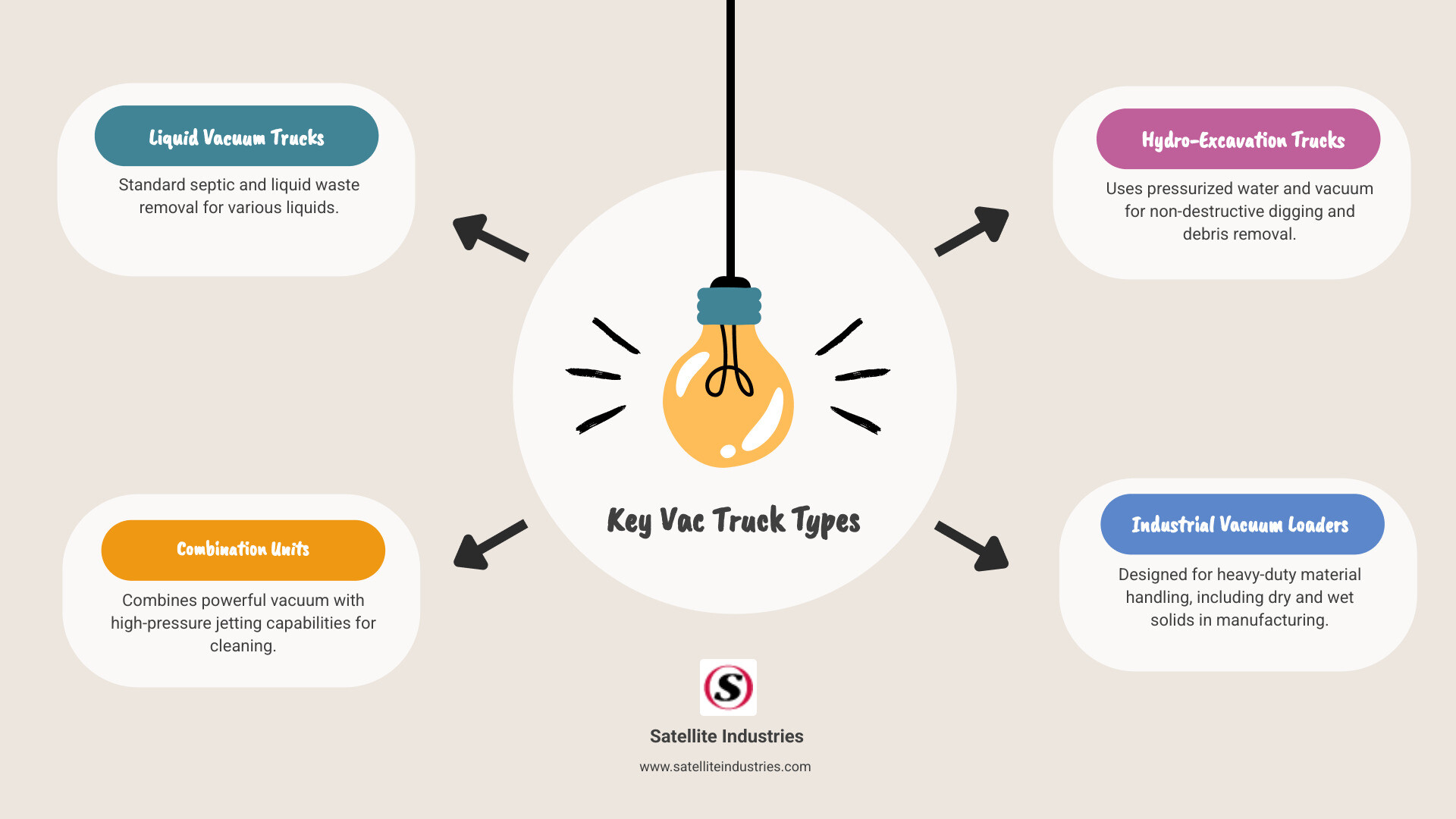
Key Vac Truck Types:
- Liquid Vacuum Trucks – Standard septic and liquid waste removal
- Combination Units – Vacuum + high-pressure jetting capabilities
- Hydro-Excavation Trucks – Non-destructive digging with water and vacuum
- Industrial Vacuum Loaders – Heavy-duty material handling for manufacturing
Primary Applications:
- Portable sanitation servicing and septic tank pumping
- Construction site cleanup and utility excavation
- Environmental spill response and contaminated material removal
- Municipal sewer maintenance and storm drain cleaning
- Industrial waste transport and tank cleaning
They’re ugly. They’re bulky. They won’t win any “best-looking truck” award. And they’re perfect for the job. As one industry expert puts it, vacuum trucks are the “unsung heroes of our infrastructure and environment” – handling everything from routine septic service to critical environmental cleanups that keep our communities running smoothly.
Modern vac trucks operate on a simple but powerful principle: creating a pressure differential between the tank interior and outside atmosphere. A vacuum pump removes air from the tank, generating suction that can theoretically lift water up to 10.3 meters. This suction power, combined with robust tank construction and specialized components, allows these vehicles to handle materials ranging from liquid waste to industrial sludge with remarkable efficiency.
I’m Michelle Amelse, Vice President of Marketing and Customer Success at Satellite Industries, with over 26 years of experience in the portable sanitation industry including extensive work with vac truck operations and fleet management. My background spans the full spectrum of vacuum truck applications, from septic service vehicles to specialized industrial units, giving me deep insight into what makes these machines essential for modern business operations.
The Ultimate Guide to the Modern Vac Truck: Technology and Applications
You might think a vac truck is just a big tank with a pump, but these workhorses pack some serious engineering under their rugged exterior. Let’s pull back the curtain on what makes these machines tick and why they’re absolutely essential across so many industries.
How a Modern Vac Truck Works: Components and Suction Science
A vac truck operates like a massive industrial straw. By creating a vacuum inside its sealed tank, it lets atmospheric pressure do the heavy lifting, pushing material through the hose and into the tank. This principle of pressure differential is simple, powerful, and effective.
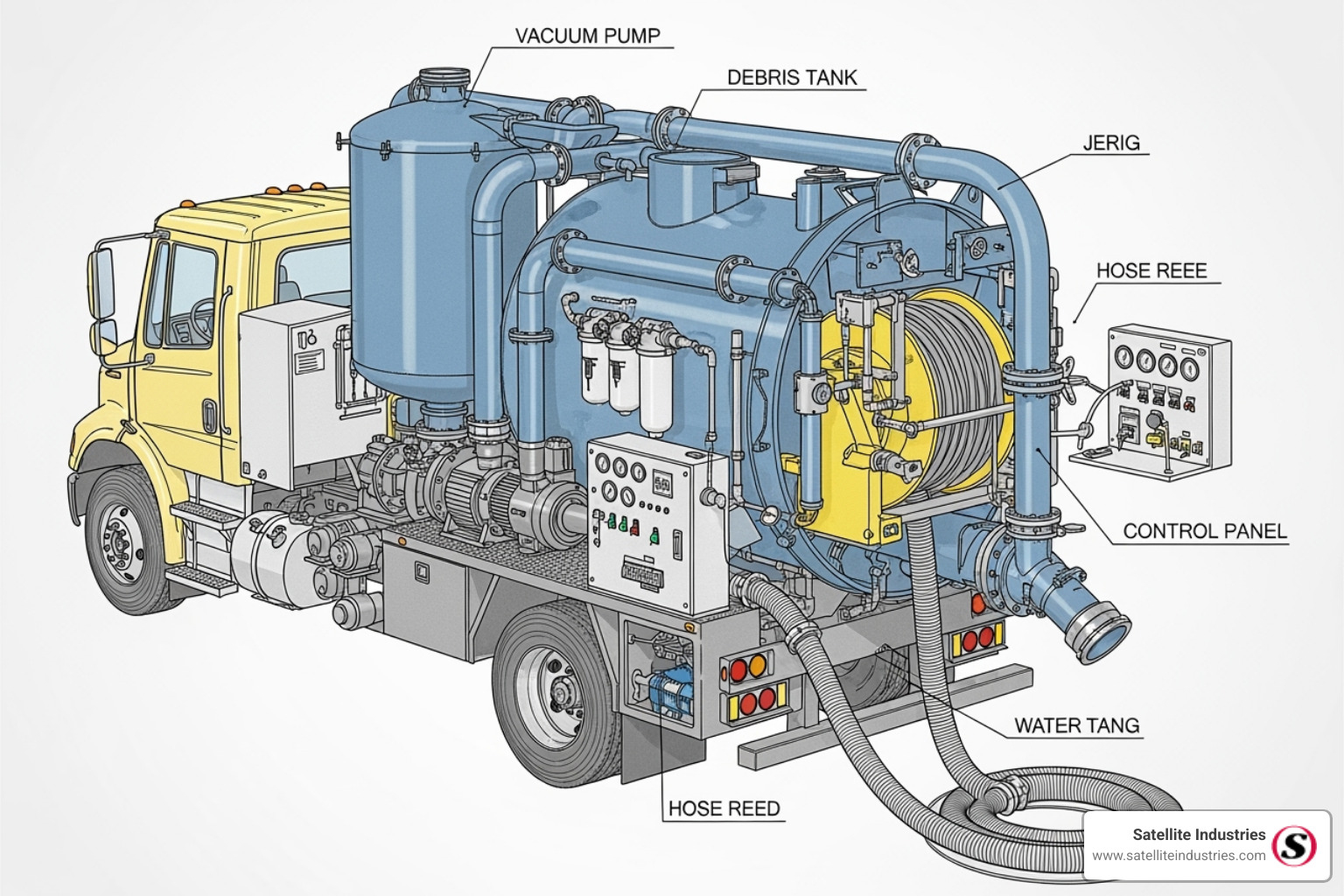
Inside the Beast: Key Components
- Tank: A fortress of steel or stainless steel, ranging from 500 to 30,000 liters, built to withstand vacuum pressure and the weight of collected materials.
- Vacuum Pump: The “lungs” of the system, rated in CFM (Cubic Feet per Minute), which pulls air from the tank. Only air should pass through this critical component.
- Hoses and Boom: The connection to the job, typically 2-4 inches in diameter. Telescoping booms can extend an operator’s reach up to 25 feet.
- Shutoff System: A two-stage safety feature. A primary float ball inside the tank prevents overfilling, while a secondary shutoff acts as a backup to protect the pump.
- Valves: Essential controls for inlet/discharge, plus pressure and vacuum relief valves to prevent tank damage and ensure operator safety.
The Science Behind the Limits
Physics dictates the theoretical maximum lift for water is about 10.3 meters (34 feet). This isn’t a design limitation—it’s the law of atmospheric pressure. You can explore more about these principles in this scientific research on hydrostatics. While real-world conditions and material types can affect performance, this principle governs the maximum suction height.
Types of Vacuum Trucks and Modern Configurations
Not all vac trucks are created equal. Modern engineering has produced a family of specialized machines for specific challenges.
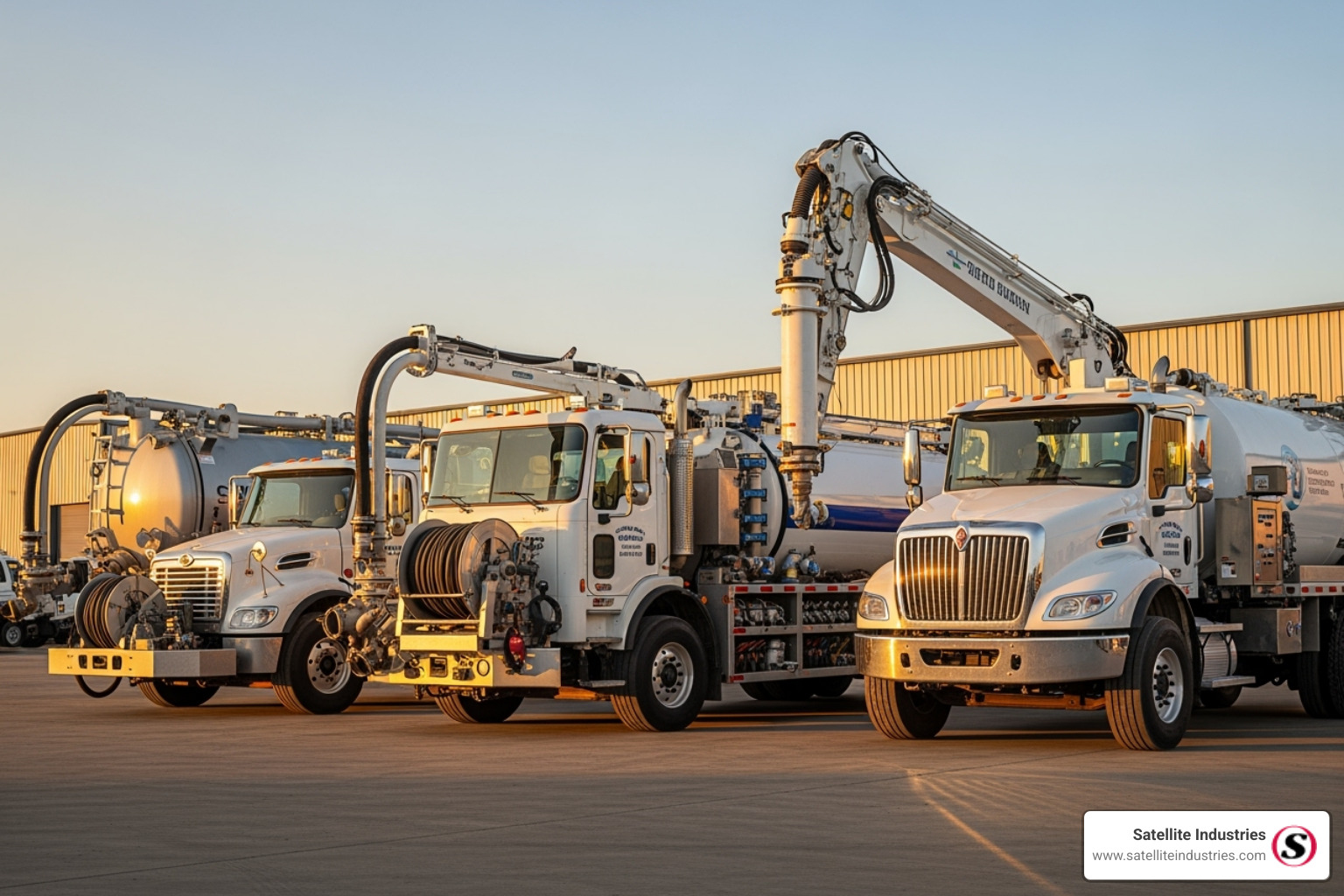
- Standard Liquid Vac Trucks: The workhorses for portable sanitation and septic service, focused on efficiently moving liquid waste. An 11,000L capacity is a common, versatile size.
- Combination Units: These “combo trucks” combine vacuum suction with high-pressure water jetting (up to 3,800 PSI) to break up and remove blockages simultaneously.
- Hydro-Excavation Trucks: Used for non-destructive digging, these trucks use high-pressure water to break up soil and a powerful vacuum to remove the slurry, safely exposing underground utilities.
- Industrial Vacuum Loaders: Heavy-duty machines designed for industrial solids and hazardous materials, featuring large debris tanks, powerful blowers, and advanced filtration systems.
Today’s vac trucks showcase impressive innovations like variable tank capacities, high-CFM blowers for rapid transfer, and telescoping booms for safety and reach. Advanced filtration, automated controls, and durable materials like Core-ten steel extend equipment life and improve operational efficiency.
Key Industries and Applications
The versatility of a vac truck allows it to handle an incredible range of materials—including liquids, sludges, slurries, and solids—across numerous industries.
- Portable Sanitation: Servicing portable toilets, holding tanks, and septic systems.
- Construction: Hydro-excavation for safely exposing utilities, trenching, and site cleanup.
- Environmental Services: Spill response, contaminated material removal, and hazardous waste management.
- Municipal & Public Works: Storm drain cleaning, sewer maintenance, and wastewater treatment plant operations.
- Industrial & Manufacturing: Tank cleaning, sump maintenance, and general waste management.
Investing in Your Fleet: Purchasing a Vac Truck for Your Business
For equipment distributors and rental companies, owning a vac truck is a strategic investment that often beats rental dependency.
- Better ROI: Ownership builds equity in an asset, lowering your cost-per-job over time compared to recurring rental fees.
- Customization: Purchase a truck specified for your market’s needs (tank, pump, boom), leading to higher utilization and better rental rates.
- Asset Building: Owned equipment strengthens your balance sheet, providing collateral for future growth.
- Availability & Reliability: An owned truck is always ready, allowing immediate response to customer needs without relying on rental availability.
- Quality Control: Full control over maintenance and training ensures maximum uptime and a reliable, professional service for your customers.
For financing options to help make ownership possible, consulting with financial advisors or exploring equipment financing companies can provide valuable guidance.
Operational Best Practices: Safety, Maintenance, and Environmental Care
Operating a vac truck safely requires respect for the machinery and the materials being handled. These practices protect people, equipment, and the environment.
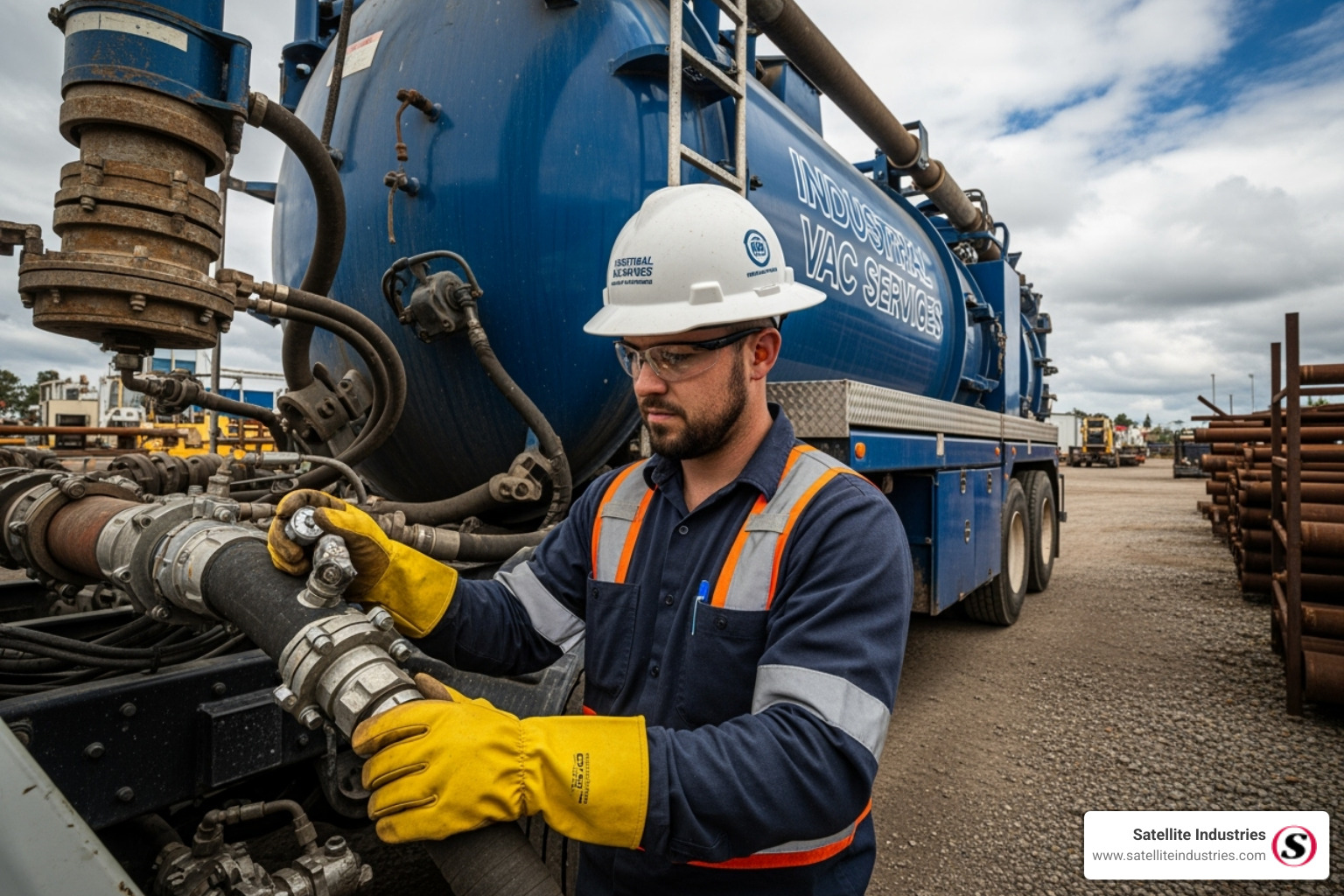
Safety First, Always
- Training: Operators must master every aspect of their vac truck, from system operation to emergency procedures.
- PPE: Personal protective equipment is non-negotiable and varies with the job, from gloves and glasses to specialized suits for hazardous materials.
- Inspections: Daily pre-operation checks of fluids, hoses, valves, and safety features prevent downtime and accidents.
- Compliance: Adherence to OSHA standards and other regulations is essential for a safe work environment.
Maintenance Keeps You Running
- Pump Care: Proper and consistent lubrication is critical, especially for rotary vane pumps.
- Tank & Hose Integrity: Regularly inspect the tank for damage and hoses for cracks, kinks, or leaks.
- Filter Systems: On industrial units, clean and replace filters regularly to maintain suction and protect the pump.
- Chassis Maintenance: Don’t neglect the truck itself—regularly service the engine, transmission, tires, and brakes.
Environmental Responsibility
Properly transport all collected material to approved treatment facilities in full compliance with local and federal regulations. Practice diligent spill prevention and maintain accurate documentation of waste disposal. For deeper insights into waste management, the Faecal Sludge Management book offers valuable technical guidance.
Conclusion: Powering Your Business with the Right Equipment
This guide has explored the vac truck from its core science to its specialized configurations. It’s clear these machines are essential workhorses for modern industry, whether you’re building a rental fleet or seeking to understand the technology.
The vac truck embodies the perfect marriage of engineering and practicality. Its ability to adapt—as a standard liquid vacuum, a combination jetter, or a precision hydro-excavator—makes it an invaluable asset for any equipment rental business. This flexibility allows your investment to serve multiple markets, maximizing your return.
As we look to the future, vac truck technology will only become more sophisticated, with advances in automation, pump efficiency, and environmental controls. These innovations promise better performance, lower operating costs, and improved safety.
At Satellite Industries, we understand that your success depends on reliable, durable equipment. Our commitment to advanced engineering for durability and user-friendliness is built into every component we manufacture. We know that when your equipment performs flawlessly, your business thrives.
Maximizing your vac truck investment lies in choosing quality equipment, implementing proper training, and maintaining rigorous safety and maintenance standards. When you get these fundamentals right, your fleet becomes a competitive advantage that drives growth and customer satisfaction.
Ready to explore how the right vacuum technology can power your business forward? Explore our industry-leading vacuum truck solutions and find why professionals across industries trust Satellite Industries for their most demanding applications.
Latest from the Satellite Industries Blog
Need Help {Finding the Right Sanitation Solution?}
Satellite Industries is the largest manufacturer of portable restrooms, restroom trailers, restroom trucks, septic trucks, slide-ins, unit haulers, vacuum technology, modular solutions, consumables and deodorizers.
.webp)
.webp)